
Not sure which resistance band is right for you? Here’s the quick breakdown:
- Power Bands : Heavy-duty loop bands for pull-ups, strength training, and full-body workouts.
- Mini Bands : Best for glute activation, warm-ups, and lower-body stability work.
- Booty Bands : Comfortable fabric bands designed for glute and hip-focused exercises.
- Tube Bands : Handle-based bands that mimic dumbbell exercises and travel workouts.
- Short Bands : High-tension bands for athletic training and advanced resistance work.
- Therapy Bands : Lightweight flat bands for rehab, mobility, and recovery exercises.
| Band Type | Resistance | Best For | Durability | Skill | Portability |
|---|---|---|---|---|---|
| Loop Resistance Bands (Power Bands) | Light → Very Heavy | Strength training, pull-ups, barbell tension | High if quality | Beginner → Advanced | Excellent |
| Mini Resistance Bands | Light → Moderate | Glute activation, warm-ups, rehab | Moderate | Beginner → Intermediate | Excellent |
| Fabric Resistance Bands | Light → Moderate | Glutes, lower body, anti-roll comfort | Often High | Beginner → Intermediate | Excellent |
| Tube Bands with Handles | Very Light → Heavy | Travel workouts, rehab, door-anchor exercises | Varies | Beginner → Intermediate | Very Good |
| Short Resistance Bands | Moderate → Very Heavy | Athletic training, speed work | High if quality | Intermediate → Advanced | Excellent |
| Therapy / Rehab Bands | Very Light → Moderate | PT, mobility, recovery work | Moderate | Rehab → Beginner | Excellent |
Resistance Bands


Resistance bands from 20+ top fitness brands — including Living.Fit, Serious Steel, BC Strength, GoFit, SMAI, NouFlex, and more. Whether you're building strength, training glutes, working on pull-ups, or recovering from injury, we carry the right band for the job.
Our curated collection covers every type — super bands for pull-up assistance and heavy strength work, booty bands for glute activation, mini loops for mobility and warm-ups, tube bands with handles for full-body training, and therapy bands for rehab. Sets, individual bands, and pro-grade options across all resistance levels (5 lb to 250+ lb).
Why bands? They're portable, joint-friendly, and effective. Whether you train at home, travel often, or want a low-impact strength tool that scales with you, resistance bands deliver progressive resistance that builds real muscle without the equipment footprint or joint stress of free weights.
Looking for guided training? Pair your bands with our Resistance Band Workouts collection or explore the Living.Fit Resistance Bands Blog for training tips and exercise guides.
Types of Resistance Bands: A Quick Guide
Not all resistance bands are built for the same job. Here's a quick guide to the six main types — and which one fits which goal.
Power Bands (Loop Bands)
Long, looped, heavy-duty rubber bands ranging from 10 to 250+ lbs of resistance. Best for pull-up assistance, full-body strength training, and barbell accommodating resistance. The most versatile band type and the right starting point for serious lifters.
Mini Bands
Short, looped bands (5–50 lbs) used for glute activation, warm-ups, and lateral lower-body work. Compact, portable, and effective for prep and stability training.
Booty Bands (Fabric Bands)
Wider, fabric-covered loops designed specifically for hip and glute training. Don't roll up like rubber loops do — more comfortable on bare skin during squats, bridges, and lateral walks.
Tube Bands with Handles
Long tubes with attachable handles — closest band-equivalent to dumbbells. Great for biceps, shoulders, chest exercises, and travel workouts. Most sets include door anchors for expanded exercise options.
Short Resistance Bands
Shorter, high-tension bands used for athletic conditioning, speed work, and advanced accommodating resistance. Niche but powerful for athletes and advanced lifters.
Therapy Bands
Flat, light-resistance bands used for rehab, mobility, and gentle strengthening work. Common in physical therapy and post-injury training.
Want the full breakdown? Read our complete guide: Types of Resistance Bands: Which One Is Right for You? — including pros, cons, recommended products, and a side-by-side comparison table.
How to Use Resistance Bands
Once you've chosen the right resistance bands for your needs, it's essential to understand how to use them effectively. Here are some tips to help you get started.
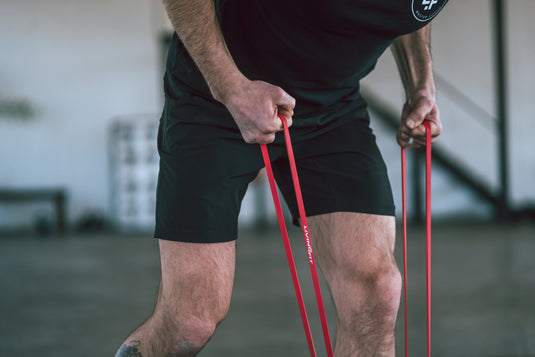
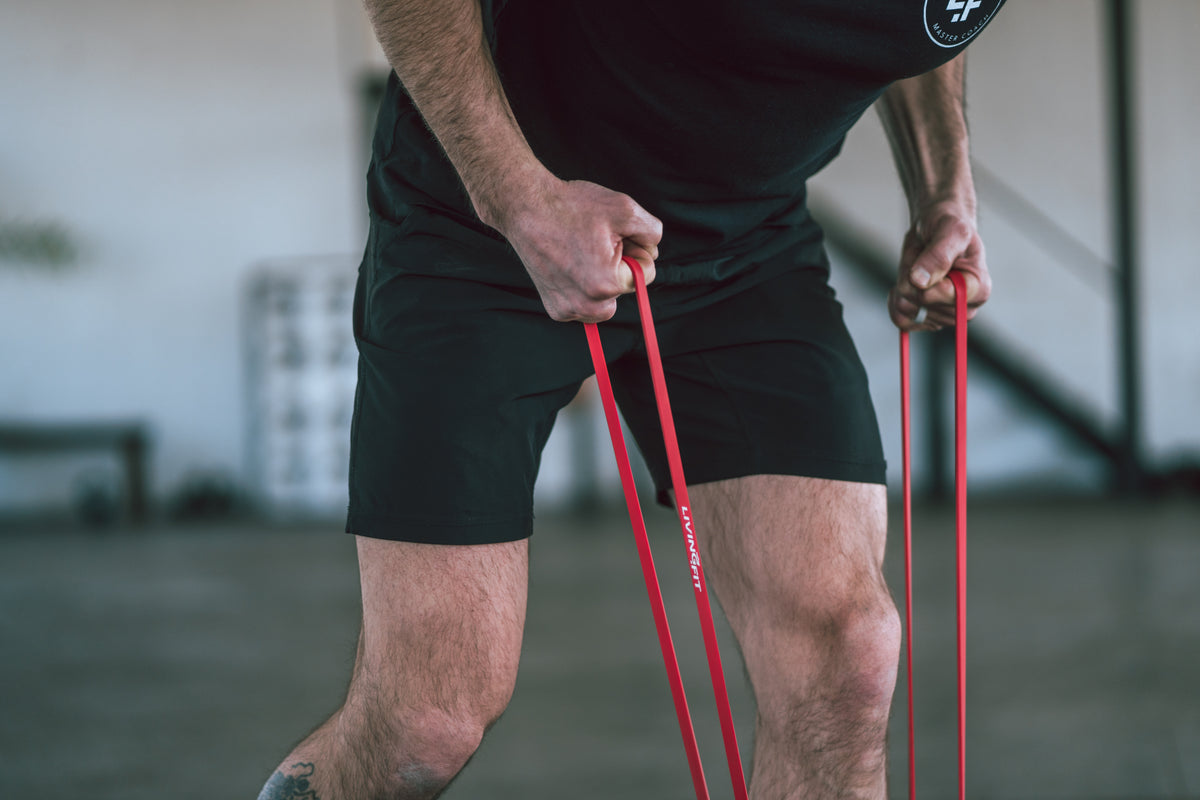
Basic Resistance Band Exercises and Techniques
Upper Body Resistance Band Exercises
- Bicep Curls: Hold the resistance band with both hands, palms facing upward. Slowly curl your hands toward your shoulders, engaging your biceps. Keep your elbows close to your sides for maximum effectiveness.
- Shoulder Press: Stand on the center of the band with your feet shoulder-width apart. Hold the band at shoulder height with your palms facing forward and push it upward, extending your arms fully. Maintain control throughout the movement and avoid locking your elbows.
More Resistance Band Exercises
Lower Body Resistance Band Exercises
Squats:
Place the resistance band under your feet and hold the other end at shoulder height. Perform squats while keeping tension on the band. Ensure proper squat form by maintaining a straight back and pushing your hips back and down.Lateral Leg Raises:
Attach one end of the band to a stable object, such as a doorknob, and secure the other end around your ankle. Stand sideways to the anchor point and lift your leg outward against the resistance. This exercise targets your hip abductors.
Core Resistance Band Exercises
Russian Twists:
Sit on the floor with your legs extended and loop the resistance band around your feet. Hold the band with both hands and lean back slightly. Rotate your torso to the right, bringing the band to the side of your hip, and then rotate to the left. This exercise engages your obliques.Plank with Band Row:
Get into a plank position with the resistance band anchored to a sturdy surface. Hold the band handles in each hand and perform a rowing motion, pulling the band toward your hip while maintaining a stable plank position.


Choosing the Right Resistance Band
Selecting the appropriate resistance band is crucial to ensure you get the most out of your workouts. Consider the following factors when making your choice:
Considerations for Different Fitness Levels
Resistance bands come in different levels of resistance, such as beginner, intermediate, and advanced. Choose a band that matches your current fitness level and allows for progression as you get stronger. Starting with the right resistance level ensures that your workouts remain challenging yet achievable.
Learn More About Resistance Bands
Want smart, practical guidance on getting stronger at home with bands? Start with these quick reads from our blog.
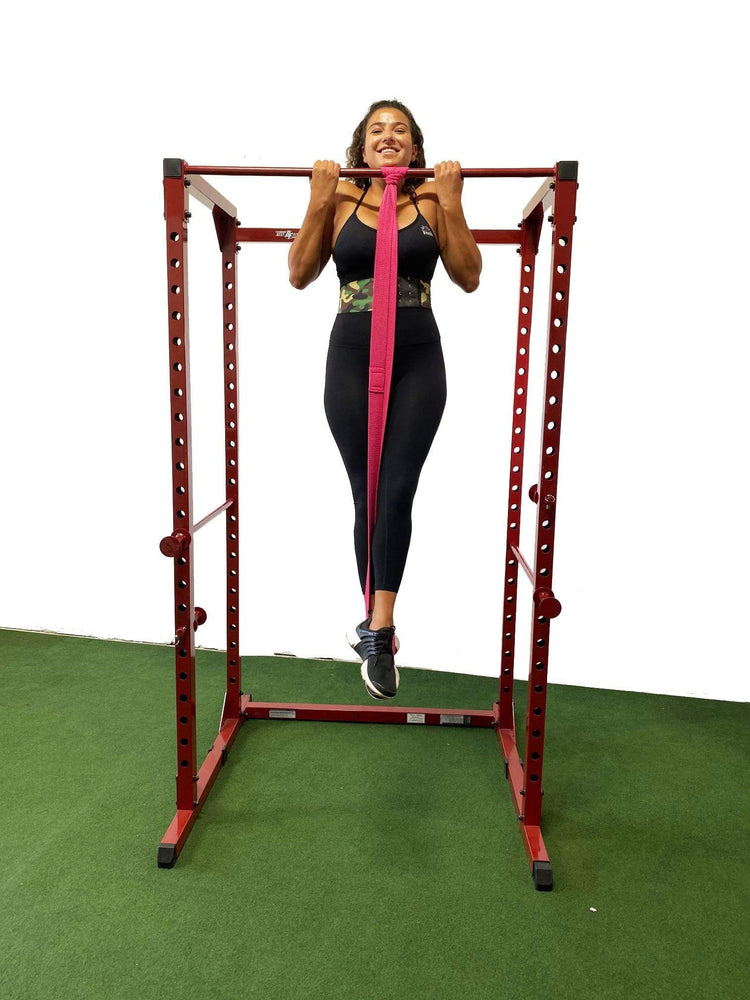
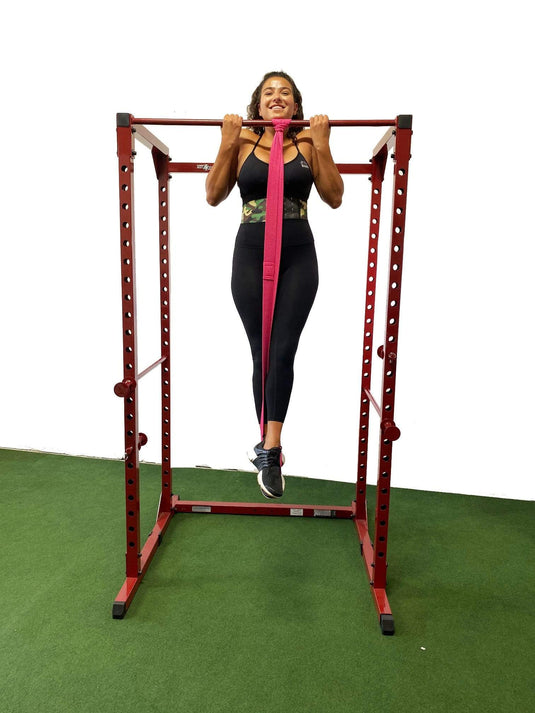
View our resistance bands in use. All purchases receive never ending, free access to our workout app with Movement Library and Workout Generator.
Frequently Asked Questions
There are several types of resistance bands:
- Loop bands (for glutes, squats, and mobility)
- Tube bands with handles (great for full-body workouts)
- Flat therapy bands (used in rehab and stretching)
- Power or pull-up bands (long, thick loops for strength training or assisted pull-ups)
Choose based on your fitness goal—loop bands are great for toning, while power bands are better for muscle building and strength training.
Resistance bands are usually color-coded and measured in pounds or kilograms of resistance. Always check the product specs—some brands vary in resistance per band size or color.
Yes. Bands provide progressive resistance, which activates muscle fibers similarly to free weights. When used consistently and with proper form, they can build strength and muscle—especially for beginners, travel workouts, or rehab.
High-quality bands can last 1–2 years or longer with proper care. Avoid overstretching (beyond 2x their length), exposure to heat or sun, and sharp surfaces. Clean them with mild soap and dry them flat to preserve elasticity.
Yes. Physical therapists often recommend bands because they allow low-impact, controlled movement. Flat bands and light resistance loops are especially good for shoulder, knee, or hip rehab exercises.
You can train all major muscle groups with bands. For example:
Legs: squats, glute bridges, lunges
Arms: bicep curls, shoulder presses, chest flysCore: Russian twists, resisted crunches
Workout programs or video demos can help guide proper technique.
- Latex bands offer more stretch and range—great for dynamic movement.
- Fabric bands are thicker, more durable, and often used for lower-body exercises because they don’t roll up or pinch.
They can substitute for weights in many exercises and are especially useful when traveling or for at-home workouts. While they may not replace barbells for heavy lifts, they are excellent for maintaining strength, mobility, and flexibility.
Use door anchors, heavy furniture, or designated wall-mounted anchors. Always test the anchor point for security before applying tension to prevent snapping or injury.
Yes, they're one of the safest tools for beginners. Start with light resistance and focus on form. Bands provide joint-friendly resistance and minimize the risk of dropping weight on yourself.