



When Is the Best Time to Take a Pre-Workout?
 Felecia NewellMScAHN, RD
View profile
 Brenda PeraltaMS, RD
Brenda Peralta, RD, is a Registered Dietitian and sports nutrition coach with 10+ years of experience helping athletes and everyday exercisers eat to perform. She's currently completing a master's in Sports Nutrition and Supplementation....View profile
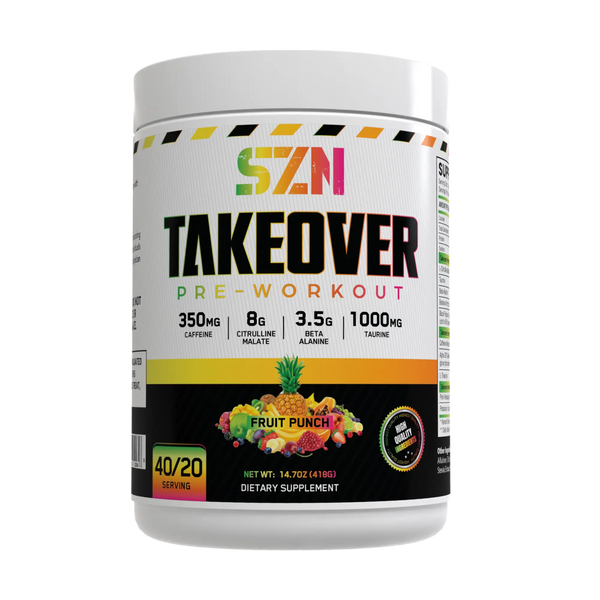
When's the best time to take a pre-workout? If you take it too soon, the pre-workout "hits" before you're ready. If you wait too long, then you don't feel the pre-workout kick in until you're almost done working out. The best time to take pre-workout depends on the formula, but 20–30 minutes before training is a practical starting point when it matches the label’s directions. Your body’s response, food intake, and bedtime can help you fine-tune that timing. This guide will help explain what can affect the best time to take your supplement to get the best results!
*This article is for general information and is not medical advice. Talk to a healthcare professional before using pre-workout supplements, especially if you are pregnant, have a health condition, or take medication.
TL;DR: When Is the Best Time to Take a Pre-Workout?
- Start with the label’s timing instructions. If it recommends 20–30 minutes before training, use that as your starting point and adjust to your body’s response.
- Include your commute and warm-up in that timing window. Taking it before leaving home may work well when you have a short drive to the gym.
- Adjust for food and stomach comfort. Food may delay caffeine absorption, but a small snack can be a practical option if taking pre-workout alone causes discomfort.
- Choose stimulant-free pre-workout for evening sessions. Caffeine can affect sleep for hours, and higher doses may require a much earlier cutoff.
When Should I Take a Pre-Workout for Best Results?
Most pre-workouts recommend taking a pre-workout 30-60 minutes before your workout. To be sure, always take your pre-workout according to the label and remember to allow enough time before your harder working sets.
Different individuals may find certain timelines work better for them depending on the pre-workout supplement.
- A 20–30-minute lead time may be convenient for products that recommend it.
- 60 minutes before exercise is the most common caffeine research protocol. [1]
-
That is a studied schedule, not a rule that every blend must follow.
Try a consistent routine for a few sessions. Keep the serving size similar so you can assess timing without changing the dose too.
Pay attention to:
- How comfortably you train.
- Whether your performance improves.
- How well you sleep that night.
Should I Take Pre-Workout Before I Leave for the Gym?
Taking pre-workout before leaving for the gym makes sense when your travel time fits the label’s directions. If timed right, the pre-workout will “kick-in” when you arrive.
For example, this routine puts your first working sets about 30 minutes after taking it:
- A 15-minute drive.
- Five minutes to change.
- A 10-minute warm-up.
A 45-minute commute creates a different schedule. Work backward from your session instead of automatically taking it when you grab your gym bag.
How Long Does It Take to Feel Pre-Workout Working?
Caffeine is usually responsible for pre-workout’s noticeable energy boost and most people can start feeling significant effects after 20-30 mins while some may feel it faster. How quickly you feel it varies from person to person.
Blood caffeine levels generally peak about 30–120 minutes after ingestion. The timing varies with the delivery method and other factors. You may notice effects before that peak. [1]
Feeling more alert is also different from measuring better exercise performance. A dramatic buzz is not the goal, and a subtle response is not a reason to take another serving.
Do I Need to Wait Until Pre-Workout Kicks In?
You do not need to feel pre-workout before starting your warm-up.
The warm-up can be part of your planned waiting time.
Aim for the effects to be building as you move into harder exercise. There is no need to wait in the parking lot for a particular sensation.
Does the “Tingling Sensation” Mean the Pre-Workout Is Working?
The tingling sensation from beta-alanine is a side effect known as “paresthesia”. However, it is not “proof” the pre-workout is working and is separate from the actual working mechanisms that improve performance.
Beta-alanine works by increasing muscle carnosine through regular supplementation and does not occur immediately. Carnosine helps buffer acidity during demanding exercise but meaningful increases take several weeks of supplementation. [2]
Some people are more sensitive to this side effect and may feel stronger tingling than others taking the same dose.
That sensation is separate from how beta-alanine supports performance. More tingling does not mean more benefit.
When Is Pre-Workout Most Effective?
In general, the effects of a pre-workout tend to peak 60-90 minutes after ingestion. However, pre-workout has no single peak time because its ingredients work on different schedules.
It helps to separate two types of ingredients:
- Ingredients with acute effects, such as caffeine or dietary nitrates. Their timing can matter for that workout. [1, 5]
- Ingredients that need time to build muscle stores, such as creatine or beta-alanine. Consistent intake matters more than the exact minute you take them. [2, 3]
Electrolytes have another role. They support fluid balance rather than creating a stimulant-like kick. [7]
Do Different Pre-Workout Ingredients Work at Different Times?
Different pre-workout ingredients can require different lead times.
Use this table to understand the evidence behind common ingredients.
|
Ingredient |
Timing studied |
What that means for your workout |
|
Caffeine |
Commonly about 60 minutes before exercise. [1] |
Remains in the body for hours. A fading buzz does not mean it has cleared. [1] |
|
Citrulline / citrulline malate |
Many acute studies use about one hour before exercise. [4] |
Performance results vary. There is no established duration that applies to every formula. [4] |
|
Dietary nitrates / beetroot |
Commonly 2–3 hours before exercise. [5] |
Blood nitrite can remain elevated for several hours. Benefits still depend on the exercise and dose. [5] |
|
Nitrosigine® |
A small study assessed blood-vessel dilation 60 minutes after a dose. [6] |
The result supports an acute effect on dilation. It does not establish a fixed window of better workout performance. [6] |
|
Glycerol |
Hyperhydration protocols may involve about 60–90 minutes and substantial fluid. [7] |
Fluid retention depends on the full protocol. Small amounts in a blend may not reproduce those results. [7] |
|
Alpha-GPC |
A small study tested one-hour timing and six days of use. [8] |
Results differed between acute and repeated use. There is no dependable onset or duration for every product. [8] |
|
L-tyrosine |
Some exercise studies use about one hour before activity. [9] |
Exercise benefits are inconsistent. A reliable performance window has not been established. [9] |
These are examples of research schedules. They are not a recommendation to take every ingredient or a guarantee that a commercial blend matches the studied doses.
How Long Does Pre-Workout Last?
In general, the effects of a pre-workout can be felt for 1.5-3.0 hours. However, pre-workout stimulation can last for hours, but the entire formula does not have one standard duration.
Caffeine’s average half-life is approximately four to six hours. This means about half the dose may still be in your body that long after taking it. Clearance varies between people. [1]
Think of two separate timelines:
- Noticeable effects: How energized or alert you feel.
- Time in your body: How long caffeine remains present, including after the workout.
Neither tells you the exact minute when all performance benefits end. Avoid adding another serving simply because the initial boost has faded.
What Can Affect How Long It Takes for a Pre-Workout to Work?
Pre-workout onset depends on both your routine and your individual response. Common factors include your weight, eating on a full stomach or fasted, and personal variance.
The same serving will not produce an identical experience for everyone. [1, 12]
Keep your routine reasonably consistent while testing a product. Taking it after breakfast one day and on an empty stomach the next can make the comparison less useful. Change one part of the routine at a time so you can identify what suits you.
Fed vs. Unfed
Food can delay caffeine absorption. An empty stomach may therefore produce a quicker perceived boost. Faster does not necessarily mean better. [12]
- Empty stomach: May feel quicker, but can be uncomfortable for some users.
- Small snack: A practical middle ground if taking the product alone bothers your stomach.
- Large meal: May delay onset and leave you feeling too full to train comfortably.
Powder vs. Pill
A pre-workouts delivery form can affect its onset. However, this generally isn’t as big of an issue but it’s worth knowing about.
Powder mixed with water
Does not need a capsule shell to break down so is generally the fastest absorbed.
Capsules
The capsule must be broken down first to release its contents first. However, that does not prove every capsule acts slower than every powder. Delivery methods and formulations vary. [1]
Follow the specific product’s instructions. Do not automatically add a fixed waiting period for all pills.
Tolerance and Sensitivity
Regular caffeine use can change how noticeable a dose feels. Individual sensitivity also varies. A weaker buzz is not a reason to keep increasing the serving. [1]
Count caffeine from all sources, including:
- Coffee and tea.
- Energy drinks.
- Caffeine-containing medications.
- Other supplements. [10]
The FDA cites 400 mg of caffeine per day as an amount generally not associated with negative effects in most healthy adults. However, this is not a target or a guarantee of comfort at that dose. [10]
Should I Take Pre-Workout Before or After Eating?
You can take pre-workout before or after eating, provided you tolerate it and follow the label.
Eating before taking a pre-workout is not required for it to work. However, it can cause discomfort in some users.
If taking it alone causes nausea or discomfort, try a small snack. Yogurt or a banana can be a simple option.
Check how much caffeine is in each serving too. If pre-workout makes you feel nauseated or jittery, the dose may be too high for you. Eating beforehand may help with stomach comfort, but it does not reduce the amount of caffeine you consume or prevent side effects from too much. [10, 12]
After a large meal, wait until you feel comfortable exercising. Do not skip needed food just to make the supplement feel stronger.
How Late Is Too Late to Take Pre-Workout?
Caffeinated pre-workout is a poor choice close to bedtime, especially at higher doses.
An earlier cutoff may be needed even if you can fall asleep easily.
Leaving at least six hours is a practical starting precaution. It is not a guarantee that sleep will be unaffected.
In a randomized trial of 23 men, a single 400-mg caffeine dose affected aspects of sleep even when taken 12 hours before bed. Participants did not always notice the disruption measured objectively meaning they did not realize their sleep was affected.. [11]
For evening sessions, consider these options:
- Train without pre-workout.
- Choose a stimulant-free formula.
- Keep caffeinated products for earlier workouts.
Does Pre-Workout Timing Change for Stim vs. Non-Stim?
Stimulant pre-workout timing largely depends on caffeine. Non-stim timing depends on the other ingredients.
Stim formulas
Require attention to the caffeine dose and your bedtime. Their energy boost may outlast the session. [1, 11]
Non-stim formulas
Avoid that caffeine-driven boost. Their timing still varies. A nitrate-focused product may need more lead time than a typical 20–30-minute routine. [5]
Read the complete label. Caffeine-free does not always mean free of other stimulants. Living.Fit’s guide to stim vs. stim-free pre-workout explains the distinction.
FAQ: When Is the Best Time to Take a Pre-Workout?
The best pre-workout schedule accounts for the ingredients and your training time.
How Long Before a Workout Should I Take a Pre-Workout?
Start with the label’s timing instructions.
Twenty to thirty minutes is a practical starting point for many formulas. Assess based on your body’s response. Caffeine studies commonly use about 60 minutes, while nitrate protocols often use longer. [1, 5]
Can I Take a Pre-Workout on an Empty Stomach?
You can take pre-workout on an empty stomach if you tolerate it. However, if you’re new to prew-workouts, you should have a small snack the first time you use it. This is especially true if a pre-workout gives you discomfort. Always review the serving size rather than assuming a faster onset is better. [10, 12]
Can I Take Pre-Workout for Cardio?
Pre-workout can be used for cardio, as caffeine has evidence for endurance exercise. Choose ingredients that match your session instead of assuming a lifting-focused formula is necessary. [1]
Conclusion
The best pre-workout timing fits both the formula and your routine.
Start with the label’s directions. Count the time before your harder working sets, including your commute and warm-up. Then adjust based on comfort and performance. Keep caffeine well away from bedtime, and remember that some ingredients depend on consistent use. Before choosing a product, check its ingredient amounts and any testing claims. Living.Fit’s third-party testing guide can help you understand those labels. Shop Living.Fit pre-workouts and put your go-to formula on Subscribe & Save so you never run out.
Related Guides
- The Complete Guide to Supplements
- Pre-Workout Ingredients Explained
- Stim vs. Stim-Free Pre-Workout
- How Much Caffeine Is in Pre-Workout? (Safe Dosing)
- Third-Party Tested Supplements: What the Seals Mean
References
1. Guest, N. S., et al. (2021). International Society of Sports Nutrition position stand: Caffeine and exercise performance. Journal of the International Society of Sports Nutrition, 18, 1. ISSN caffeine position stand
2. Trexler, E. T., et al. (2015). International Society of Sports Nutrition position stand: Beta-alanine. Journal of the International Society of Sports Nutrition, 12, 30. ISSN beta-alanine position stand
3. Kreider, R. B., et al. (2017). International Society of Sports Nutrition position stand: Safety and efficacy of creatine supplementation in exercise, sport, and medicine. Journal of the International Society of Sports Nutrition, 14, 18. ISSN creatine position stand
4. Gough, L. A., et al. (2021). A critical review of citrulline malate supplementation and exercise performance. European Journal of Applied Physiology, 121, 3283–3295. Citrulline malate review
5. Jones, A. M. (2014). Dietary nitrate supplementation and exercise performance. Sports Medicine, 44(Suppl. 1), S35–S45. Dietary nitrate review
6. Rogers, J. M., Gills, J., & Gray, M. (2020). Acute effects of Nitrosigine® and citrulline malate on vasodilation in young adults. Journal of the International Society of Sports Nutrition, 17, 12. Nitrosigine and citrulline trial
7. van Rosendal, S. P., Osborne, M. A., Fassett, R. G., & Coombes, J. S. (2010). Guidelines for glycerol use in hyperhydration and rehydration associated with exercise. Sports Medicine, 40(2), 113–129. Glycerol hydration guidelines
8. Bellar, D., LeBlanc, N. R., & Campbell, B. (2015). The effect of 6 days of alpha glycerylphosphorylcholine on isometric strength. Journal of the International Society of Sports Nutrition, 12, 42. Alpha-GPC trial
9. Donnan, K. J., Williams, E. L., & Stanger, N. (2025). Tyrosine supplementation is ineffective in facilitating soccer players’ physical and cognitive performance during high-intensity intermittent exercise in hot conditions. PLOS ONE, 20(1), e0317486. Tyrosine exercise trial
10. U.S. Food and Drug Administration. (2024). Spilling the beans: How much caffeine is too much? FDA caffeine guidance
11. Gardiner, C. L., et al. (2025). Dose and timing effects of caffeine on subsequent sleep: A randomized clinical crossover trial. SLEEP, 48(4), zsae230. Published online October 8, 2024. Caffeine dose and sleep trial
12. Harvard T.H. Chan School of Public Health. (n.d.). Caffeine. The Nutrition Source. The Nutrition Source: Caffeine


