




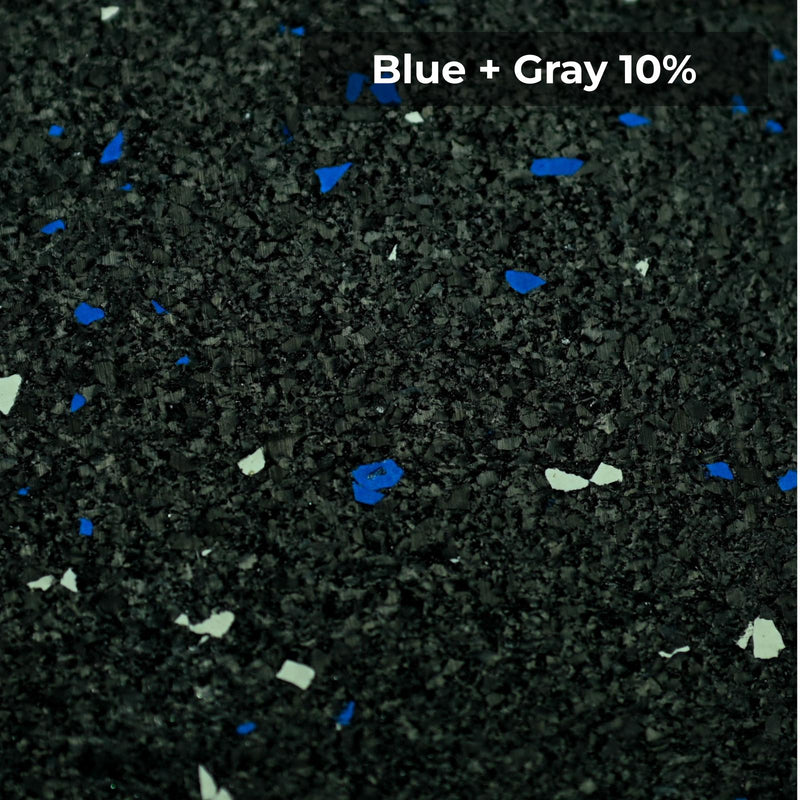

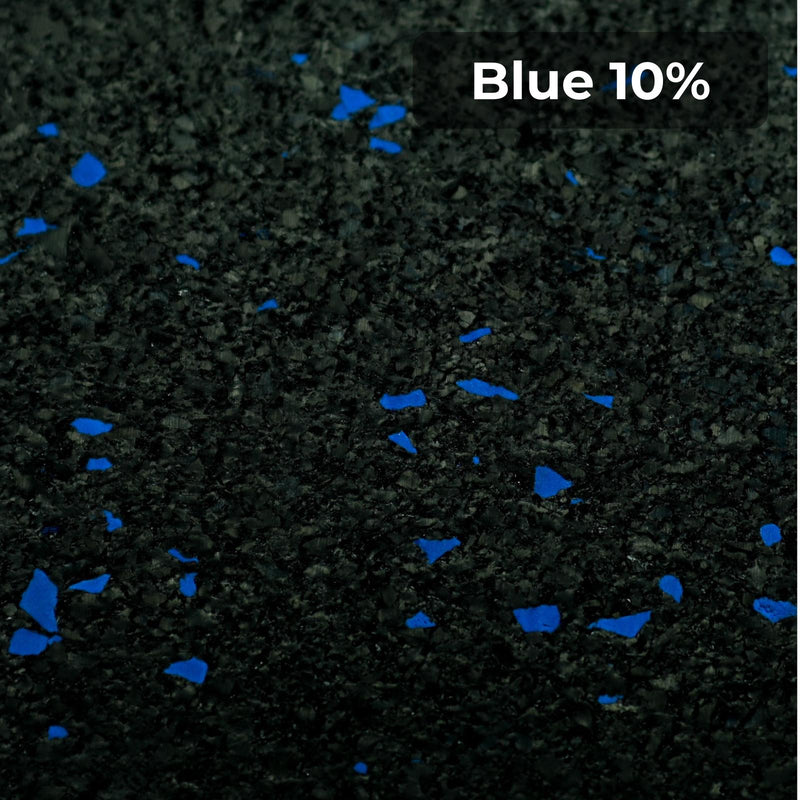
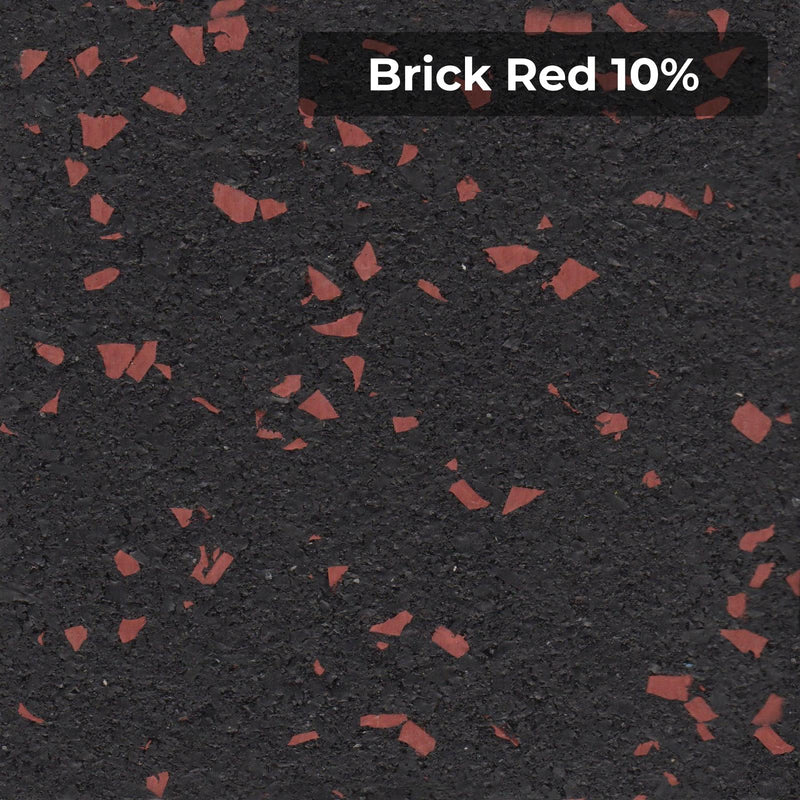

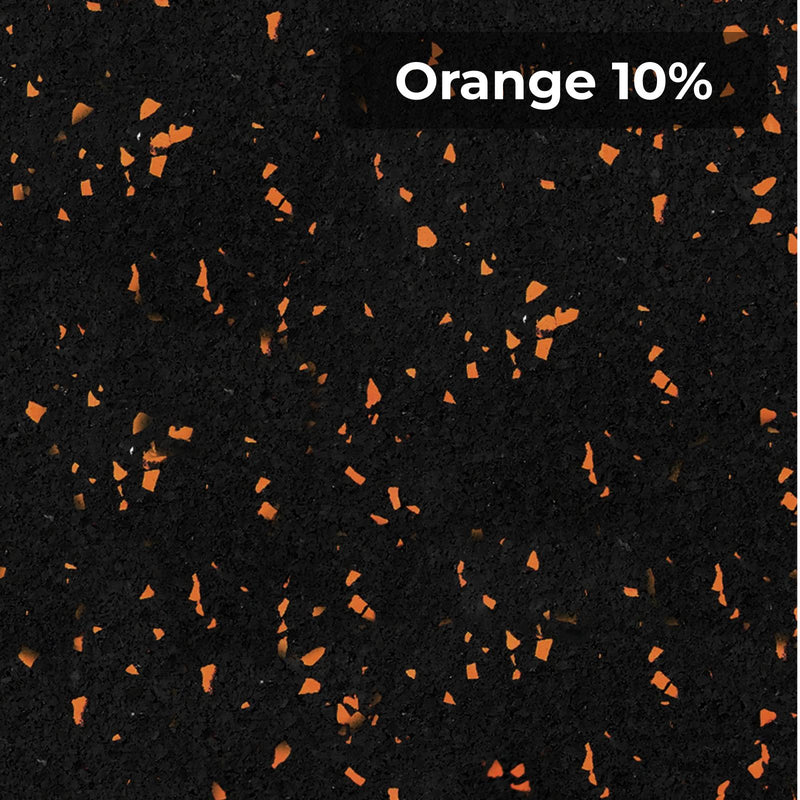

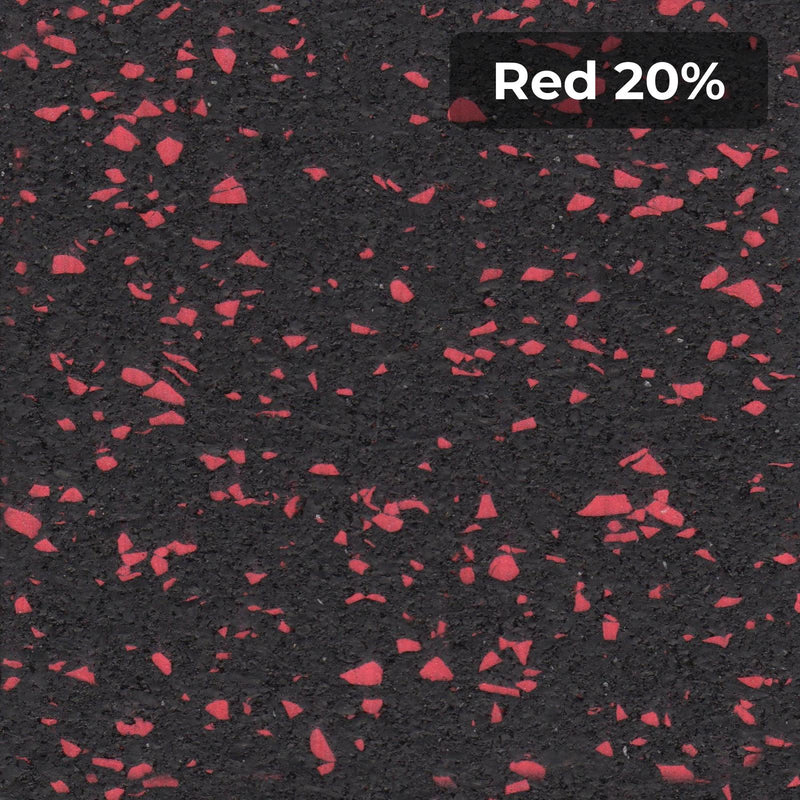

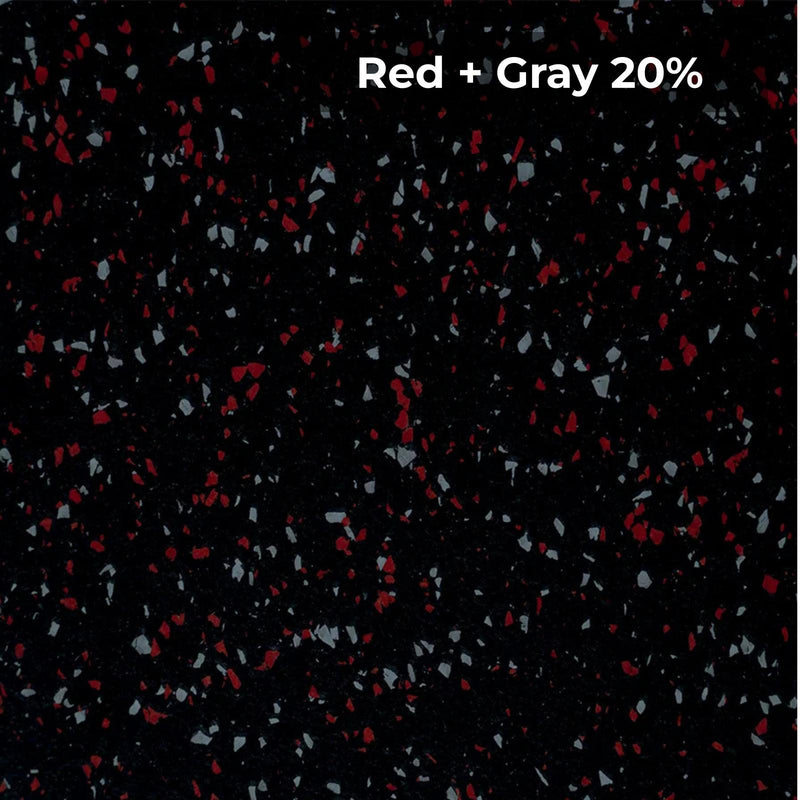





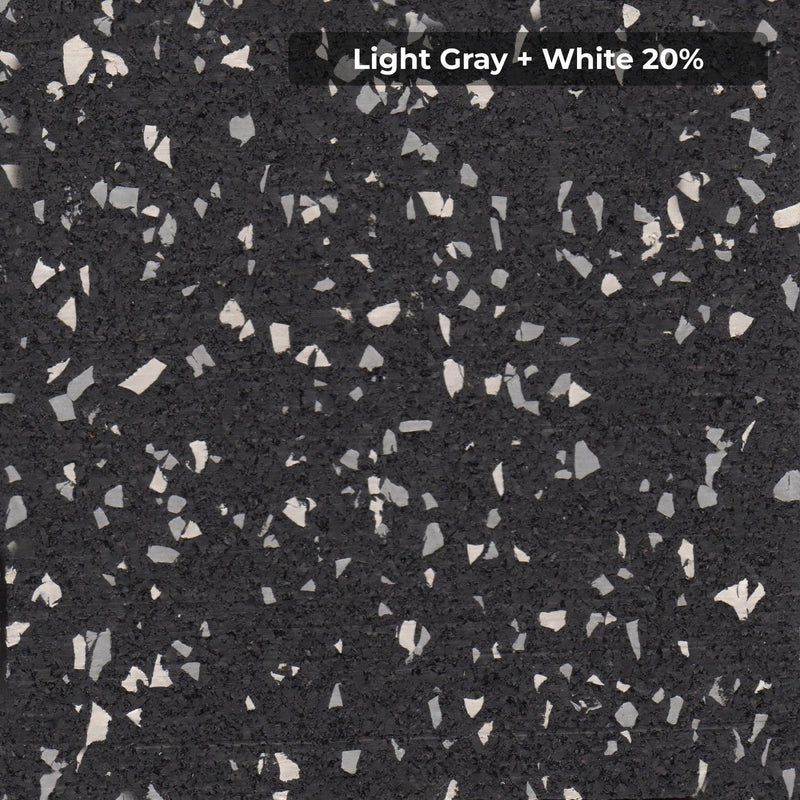
About These Rolls
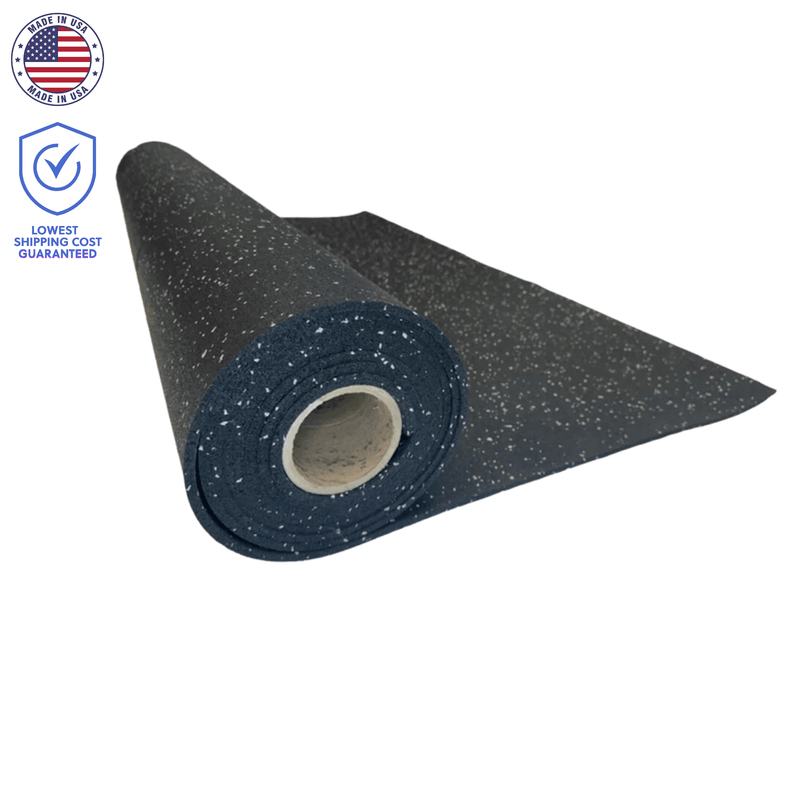
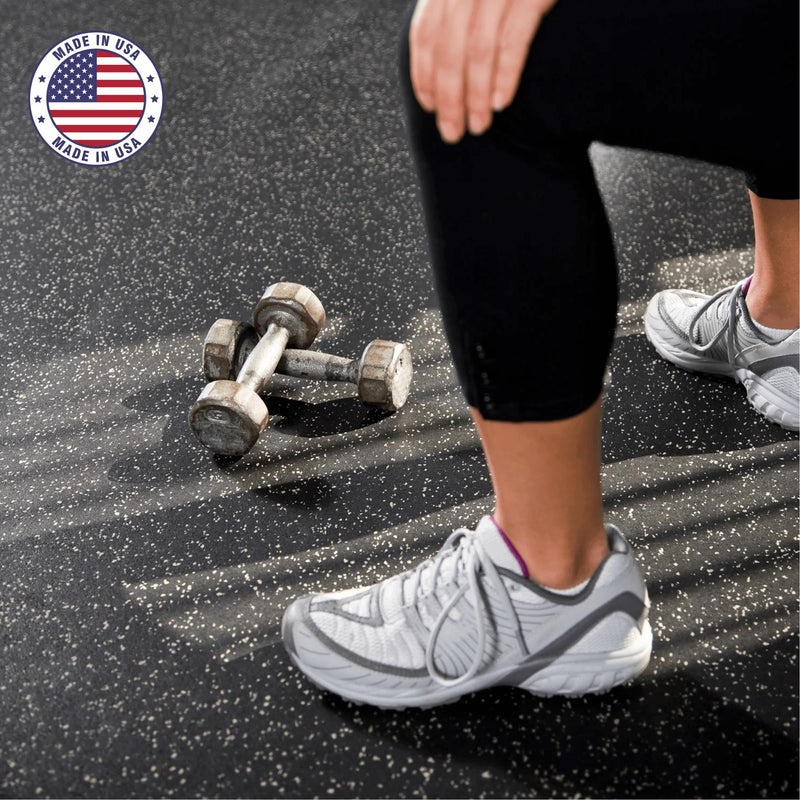
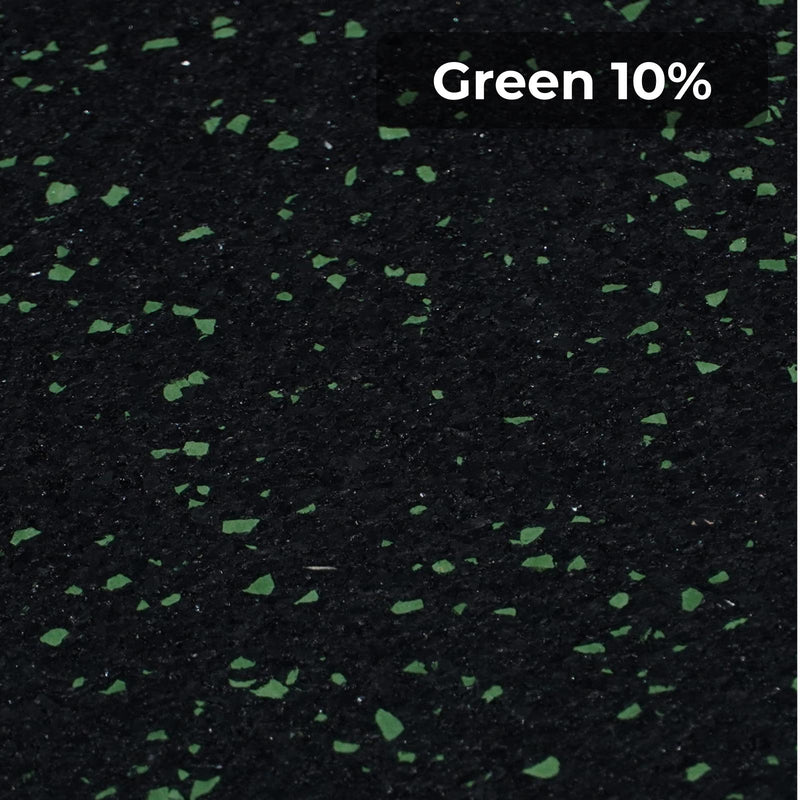
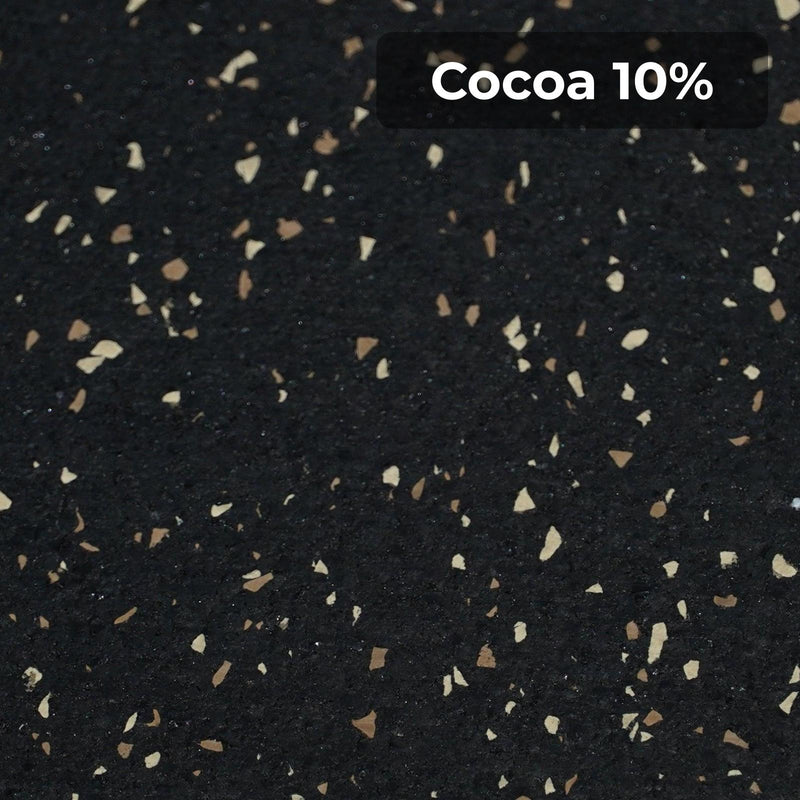
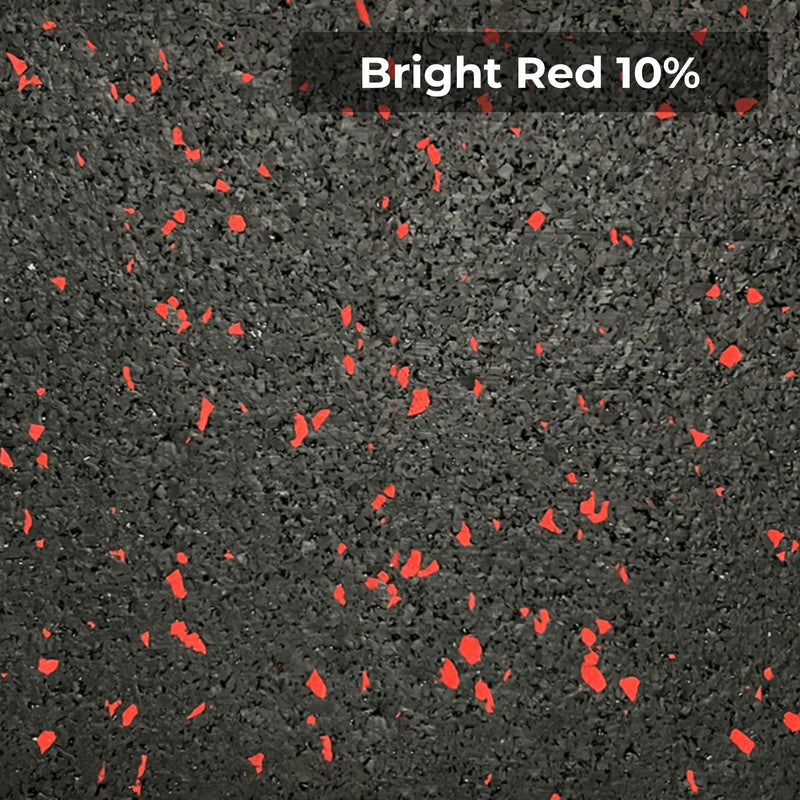
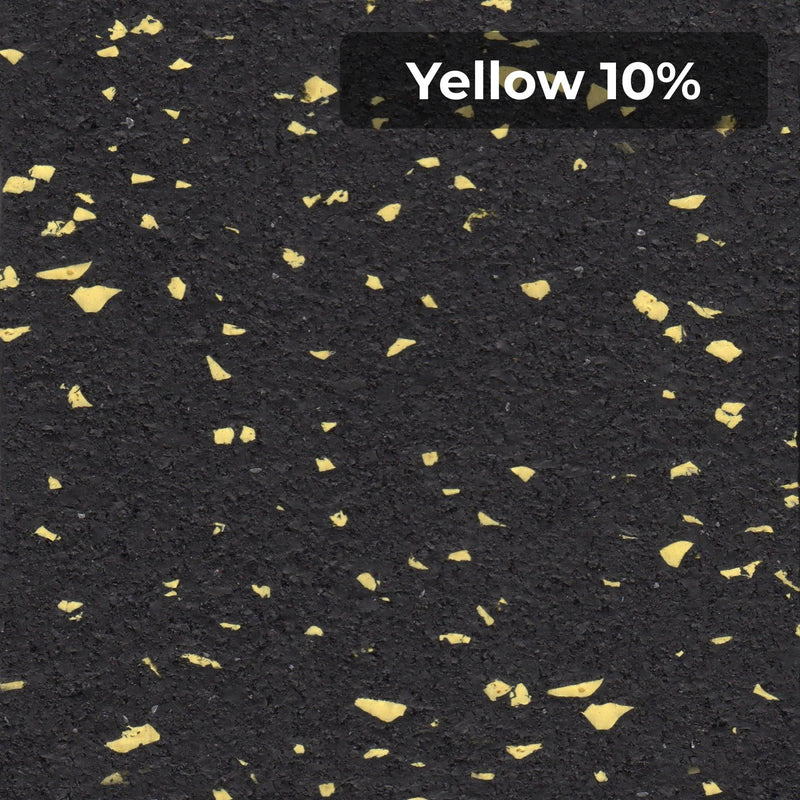
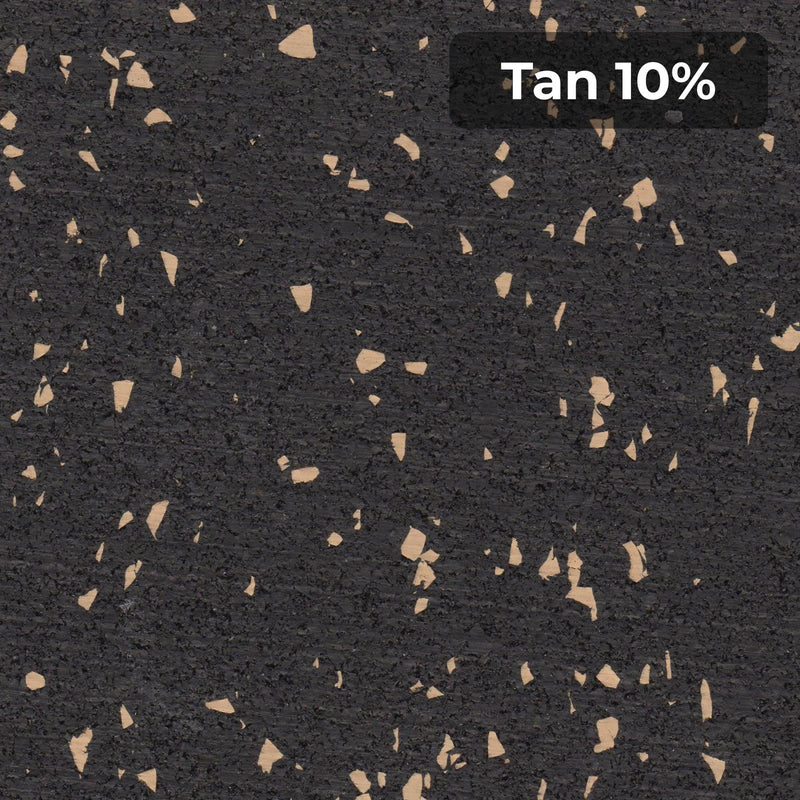
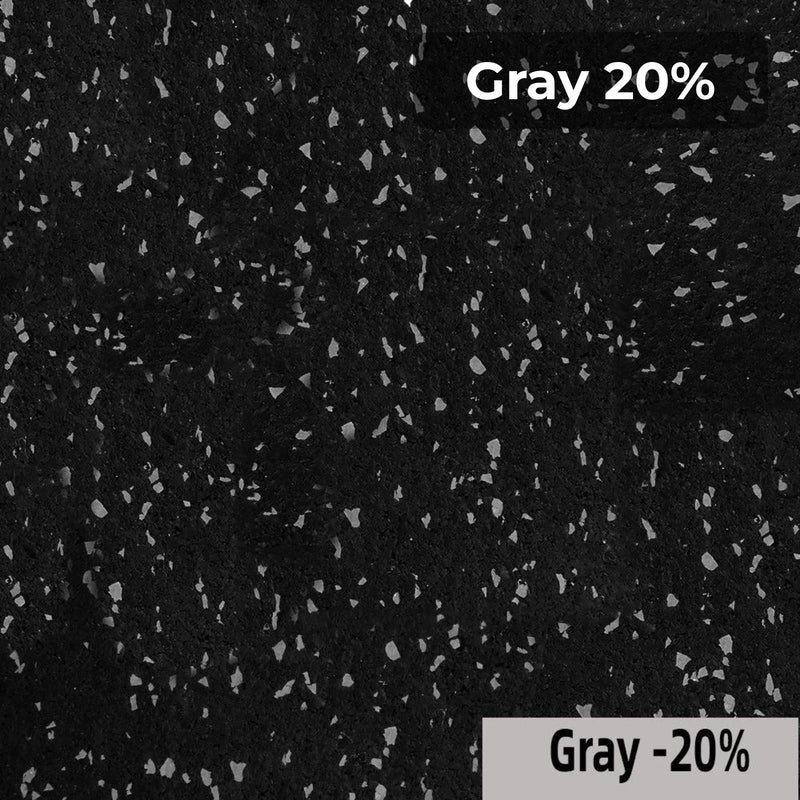
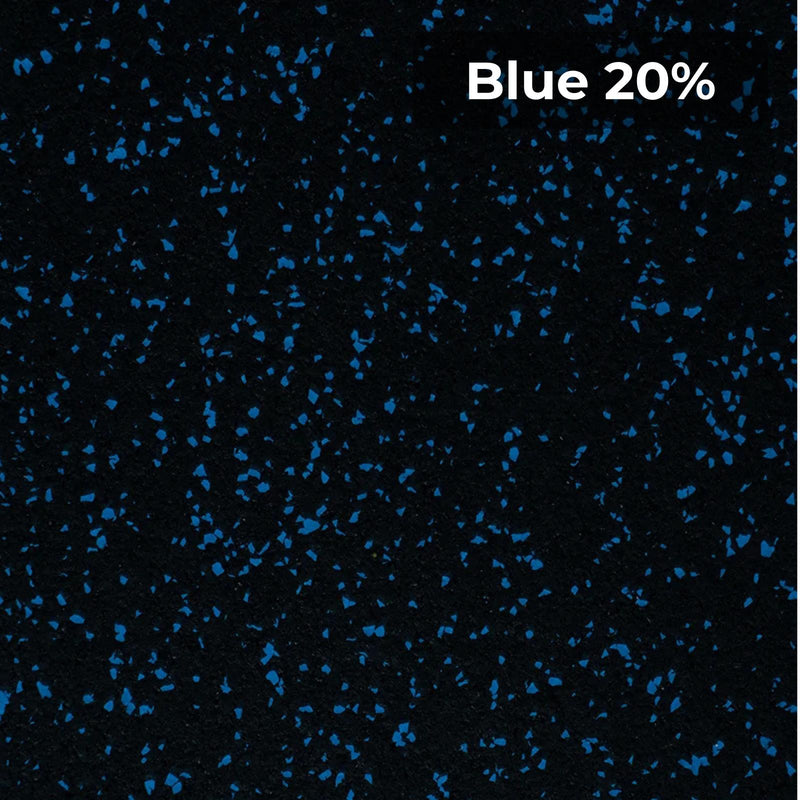
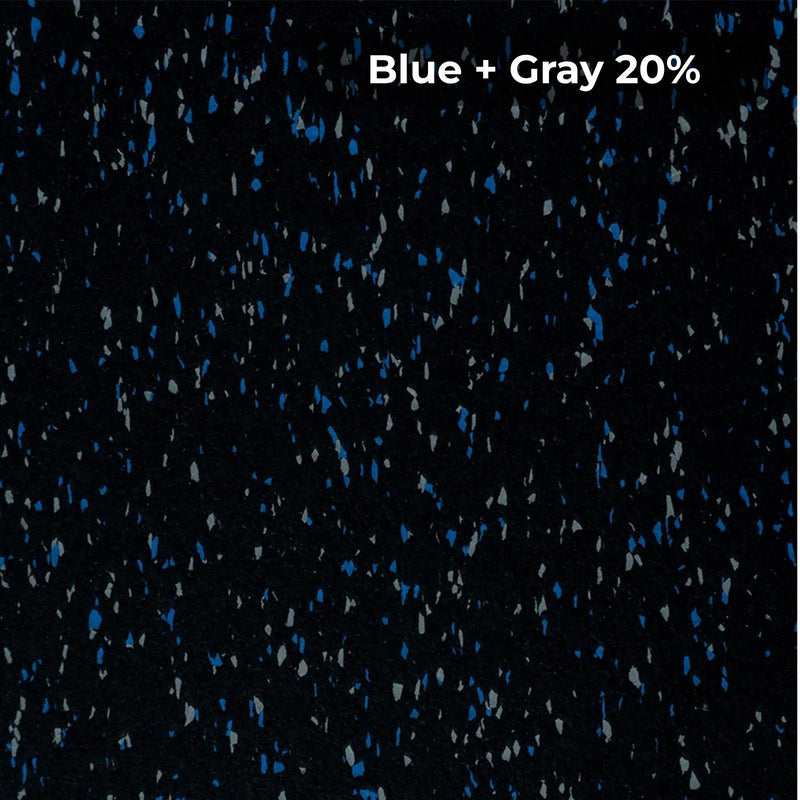
Commercial-grade rubber flooring rolls made in the USA. These 4-foot wide rolls are precision cut to your required length and built from premium recycled rubber buffings with EPDM flecks, not low-grade crumb rubber or EVA foam.
Designed for serious training environments, they provide the durability, shock absorption, and stability required for home gyms, commercial facilities, and heavy equipment spaces.
Named “Best Home Gym Flooring Overall” by Garage Gym Reviews, these rolls are trusted by lifters, facility owners, and installers who demand long-term performance.
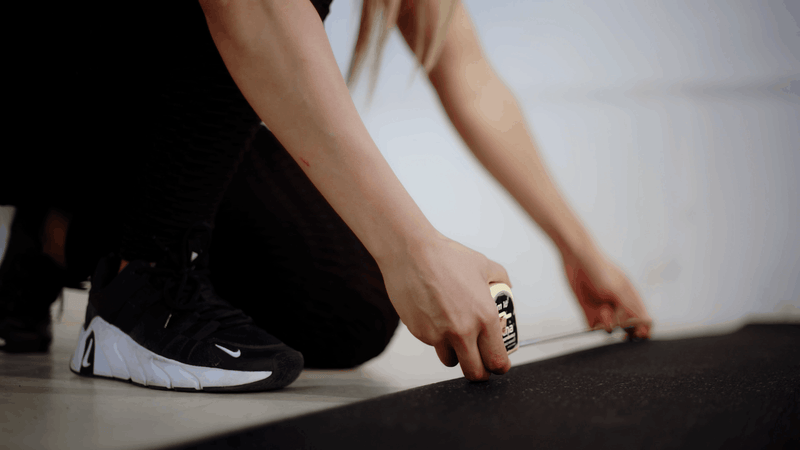
Rolls may arrive slightly longer than ordered so installers have enough material to square the flooring during installation, which helps ensure a clean final cut. Walls are rarely true square so an extra 12-24 extra inches are added to allow for perfect cutting against walls. You might consider adding a utility knife if you do not have one handy.
An alternative if you need absolutely precise length for spaces in your home, we recommend our Rubber Mats.
If you need a single roll, 10 feet or less or are looking for something easier to install, we recommend our Rubber Mats which come in lengths of 3, 6, 8, or 10 feet.
Built for Real Training
The dense rubber construction absorbs impact from heavy deadlifts and dropped weights while reducing noise and protecting the subfloor beneath. Unlike foam alternatives, these rolls stay stable under racks, machines, and caster wheels without compressing or shifting.
Key benefits:
- Shock absorbing to reduce noise and protect substrate
- Slip resistant surface for secure footing
- No strong odors or off-gassing
- Resistant to mold and mildew
- Made with 92% recycled premium rubber
Precision Fit and Installation
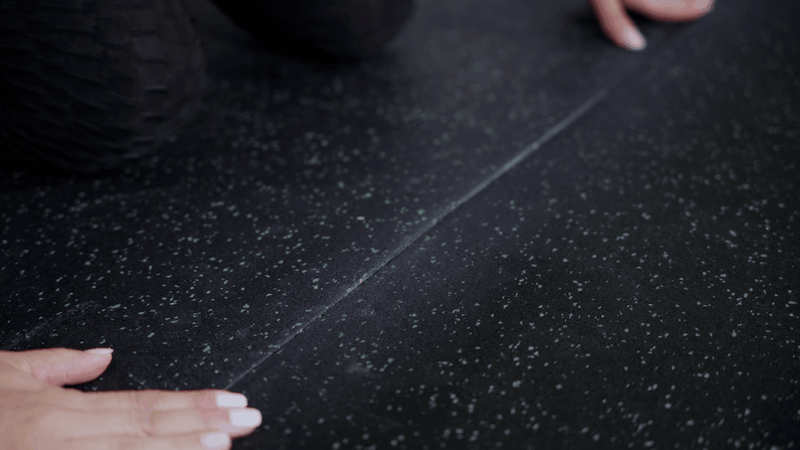
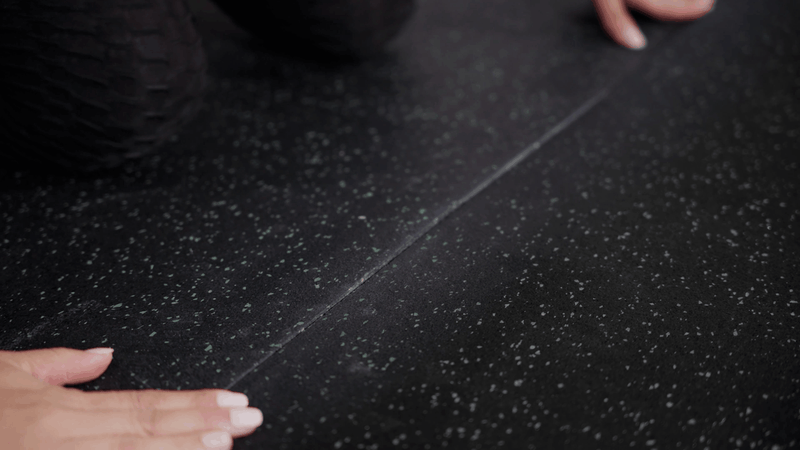
Each roll is waterjet cut for clean edges and tight seams, creating a nearly invisible connection between rolls.
Rolls may arrive slightly longer than ordered so installers can square the flooring during installation. This typically results in 10 to 12 extra inches that can be trimmed if precise length is required.
No tape or glue is required for most installations. Installation guides are available for high traffic or commercial spaces.
How Pricing and Ordering Works
Initial prices displayed are per square foot.
- Use the calculator to enter your space dimensions.
- The calculator provides two layout options for length and width.
- Quantity and order total automatically adjust based on total square feet and rolls required.
- Select your preferred layout by clicking it.
- Click “Add to Cart.”
The quantity and price in your cart reflect total square feet, dimensions, and number of rolls required to cover your space.
If you think you found a better deal, email info@living.fit with the details and we will review it.
If your interested in an order of more than 5,000 square feet contact info@living.fit. If you need a specific thickness and color combo not currently displayed and it is more than 1,100 square feet, contact us at info@living.fit and we can create a quote for you.
Where These Rolls Perform
Ideal for:
- Home gyms with heavy deadlifting
- Commercial weight rooms
- Garage gyms
- Basements
- Kennels
- Workshops with machinery
Can be installed over concrete, garage floors, existing flooring, and even carpet.
Thickness and Weight
Rolls are always 4 feet wide and cut to your selected length.
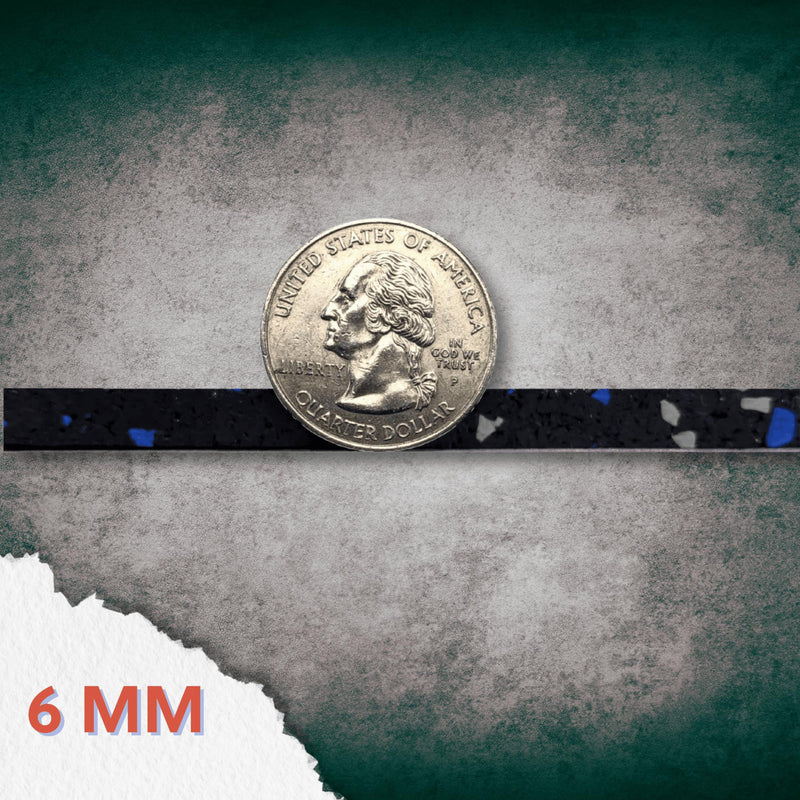
- 6mm (1/4 inch): 1.6 lbs per sqft
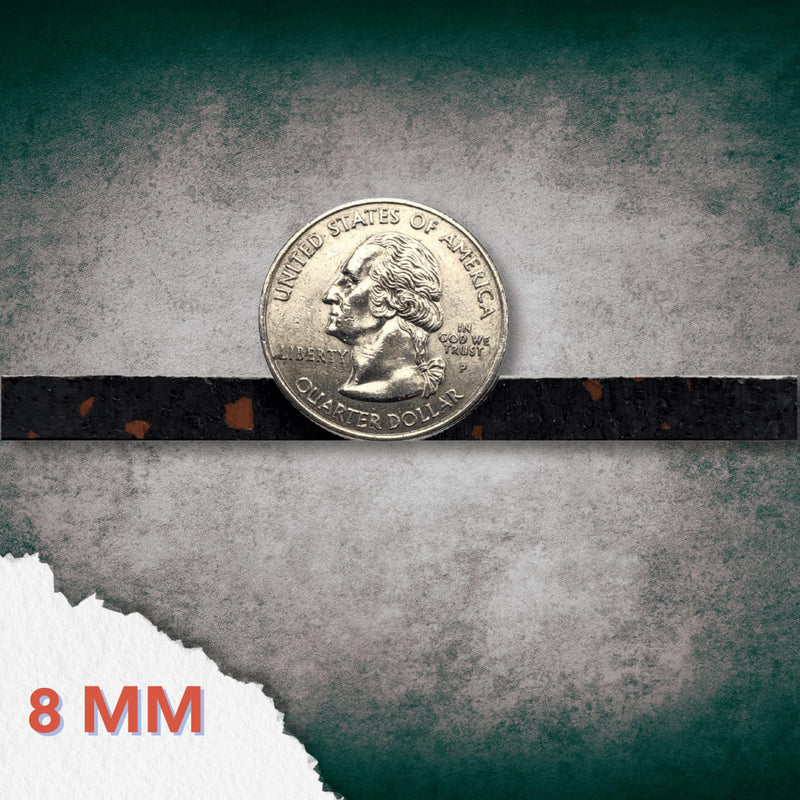
- 8mm (5/16 inch): 1.9 lbs per sqft
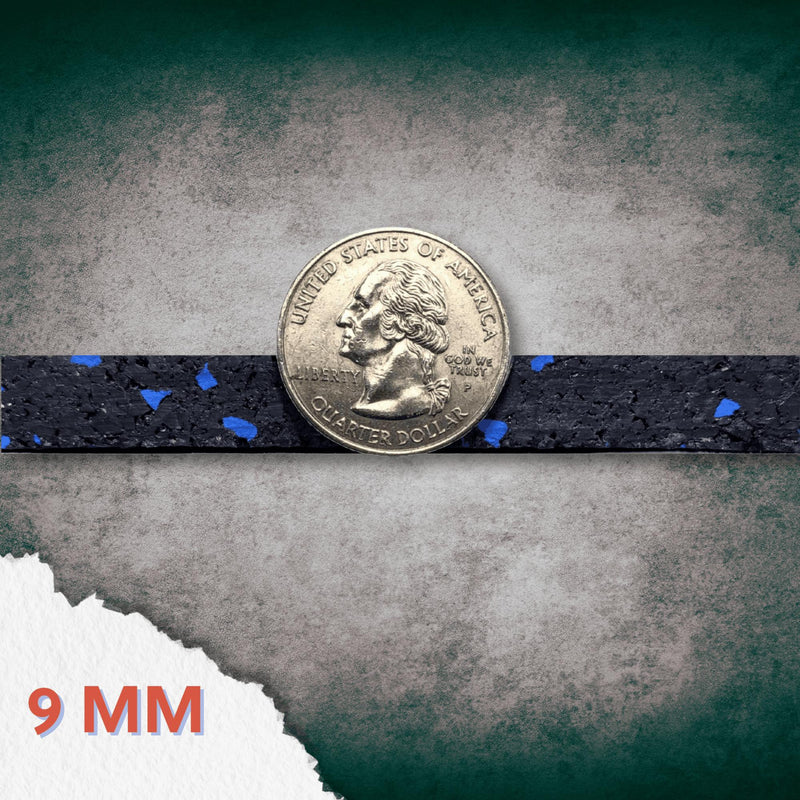
- 9mm (3/8 inch): 2.2 lbs per sqft
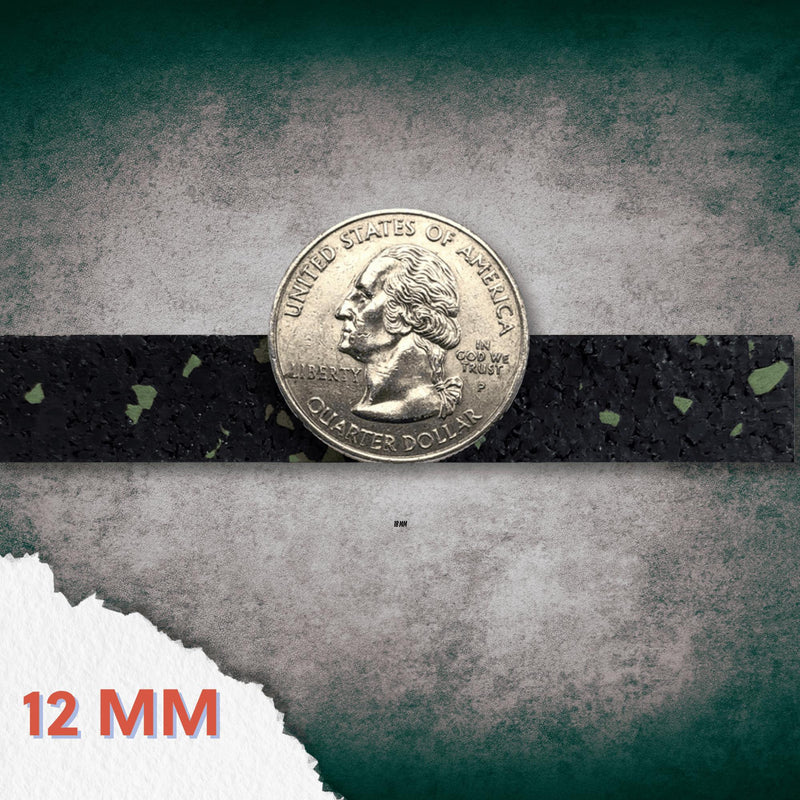
- 12mm (1/2 inch): 3 lbs per sqft
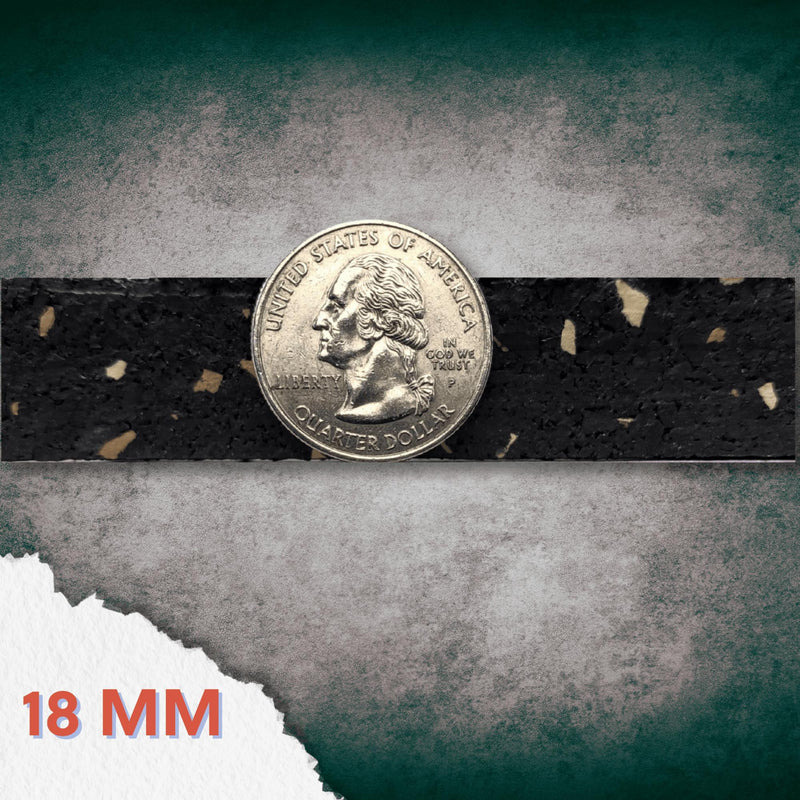
- 18mm (3/4 inch): 4 lbs per sqft
Shipping, Payment, and Guarantees
We offer a Lowest Shipping Cost Guarantee. Shipping is calculated at checkout based on your location and order weight, and we show you exactly what carriers charge. If you find a comparable product at a better price, email info@living.fit.
Quick Ship colors typically leave within 3 to 5 business days. Standard colors ship in 10 to 14 business days. Freight orders include lift gate delivery. Inside delivery is available upon request.
Choose installment payment options at checkout to pay over time.
Backed by a 5 Year Warranty and a 30 Day Money Back Guarantee so you can order with confidence.
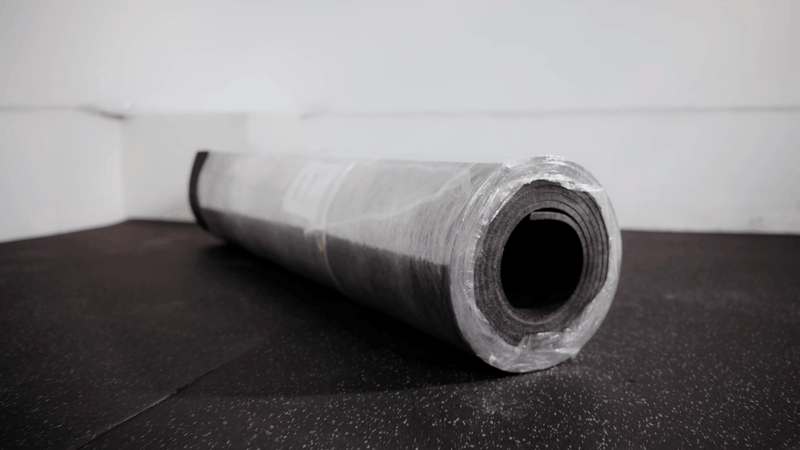
During manufacturing and shipping, small pins may be used to secure the rolled rubber to its core to keep it tightly wound; these are a normal part of the production process and do not indicate prior use or a returned product.
Ordering & Customization
How thick should my flooring be?
What's the difference between Confetti, Natural Recycle, and Standard rubber?
Can I order a custom color/thickness combo?
Can I get a free sample before ordering?
How can I contact you with questions?
How much flooring do I need?
Can I order shorter rolls? I'm worried about the weight.
How long will my order take to arrive?
What's the difference between Quick Ship and Standard?
Why does Quick Ship cost more?
Installation
Do rolls need to be glued down?
Does the roll come with tape included?
How much adhesive do I need, and does it bond to concrete?
Can this be installed over concrete or existing floors?
Are these waterproof?
Will this protect my hardwood floor, and how does it install — do I need to glue it down or does it just lay in place?
Rolls or tiles — which is better for my space?
How do you cut rolls during installation?
Does rubber flooring damage concrete or garage floor sealers?
Do I need underlayment?
How do I make edges lie down.
Performance & Durability
Will it protect my subfloor and reduce noise from dropped weights?
Is it waterproof, and can I use it in a basement?
Can I put heavy gym equipment directly on it?
How long does it last?
Can it be used outdoors?
How does it compare to foam mats?
Care & Other
Will it smell like rubber?
Why do rolls sometimes arrive slightly longer than ordered?
Is Living.Fit flooring made in the USA?
How do I clean rubber flooring?
Installation
How much tape do I need?
Where should I put the tape?
How do I prep the floor before taping?
The tape liner is hard to start. How do I peel it?
Will I need to cut my rolls?
Can I install this flooring over carpet?
What tools do I need to install rubber flooring?
How do I cut around rack feet, posts, or corners?
No FAQs match your search.
Tape or glue is NOT required for simpler home gym set ups. For high-traffic areas or spaces without climate control, glue is ideal to ensure a long-lasting, secure installation with tightly sealed seams that withstand temperature changes. For DIY projects or temporary setups—especially in leased spaces—double-sided tape offers a reliable, non-permanent solution that keeps tiles in place without the need for adhesive.
A. Double-Sided Tape Installation
- Make sure the subfloor is clean, dry, and free of debris.
- Lay the rubber rolls loosely in the room to create your layout. Allow them to relax for 24–48 hours.
- Rubber rolls may be directional. Make sure the color matches across all rolls. If not, try flipping or rotating the rolls 180 degrees.
- Cut the rolls to fit using a straight edge and a sharp utility knife. Leave a small gap around the edges (roughly the thickness of the roll) to allow for expansion.
- Roll back one end of each roll and apply double-sided tape along the perimeter of the subfloor.
- Apply the tape directly to the subfloor—typically one line of tape on each seam and at the perimeter—to hold the flooring securely in place.
- Once the tape is applied, carefully press the rubber flooring onto it, smoothing out any bubbles and ensuring the edges align tightly. This method is ideal for DIY projects, leased spaces, or areas where permanent adhesives aren't suitable.
- Press the rubber back into place on top of the tape.
- VIEW TAPE HERE
B: Full Adhesive (Glue-Down) Method
- Confirm that the subfloor is clean, dry, and free from any residue or moisture.
- Place the rubber rolls loosely on the floor to determine layout and allow them to relax for 24–48 hours before permanent installation.
- Tip: As with the tape method, check that all rolls align in both color and pattern. Rotate or flip rolls if there are noticeable differences.
- Use a straight edge and a sharp utility knife to cut the rolls to the required dimensions, leaving a perimeter gap for expansion.
- Roll up one end of a section and spread a thin layer of polyurethane-based adhesive over a 10-foot stretch of subfloor.
- Gradually unroll the flooring onto the adhesive in 10-foot sections, continuing until the entire length is in place.
- Once the rolls are fully adhered, go over the surface with a 100-pound roller to ensure strong bonding. If a roller isn’t available, walking over the surface using short, firm steps can also help.
- View glue here or as an add on item. on this page
Initial Cleaning Procedure
- Remove all surface soil, debris, sand, and grit by sweeping, dust
mopping or vacuuming. - Scrub floor with recommended Rubber Floor
Cleaner with a rectangular microfiber mop. A soft nylon brush may be
used in more heavily soiled areas. - DO NOT flood the floor with water as the Interlocking design will allow
water to pass through
Regular Cleaning Procedure
- Sweep, dust mop, or vacuum floor to remove surface soil, debris,
sand, and grit. - Damp mop with a microfiber mop using Rubber Floor Cleaner
Restorative Cleaning Procedure
- Sweep or vacuum to remove loose soil.
- Heavy scrub using a rotary scrubber or automatic scrubber with Brown or Black Stripper pad and solution of Rubber Floor Cleaner.
- Pick up solution with wet vac
- Rinse with clean water. Do not flood the floor.
- Allow the floor to thoroughly dry.
Shipping & Freight
Rubber flooring is heavy, so it often ships by freight (LTL truck), not standard parcel. The same way appliances and furniture ship. Because of that, shipping is priced by your order's total weight, your distance from us, and whether it's delivered to a home or a business.
Smaller orders like a single roll, a few mats, or a sample ship for much less than a full garage's worth of flooring. The best way to know your exact cost is to add your items and enter your address. You will see real shipping before you commit, no guessing.
Our Lowest-Cost Shipping Guarantee: we show you the exact rate the carrier charges us and mark it up by nothing. Find the same product delivered for less? Email info@living.fit or use on-site chat and we'll match it where we can.
Ways to make it easier
- Pay over time — most orders can be split with Shop Pay
- Try a sample first — not ready to commit? A sample lets you check the exact product in your space.
- Order once, correctly — freight is priced per shipment, so one right-sized order beats two small ones. The calculator gets your quantity right the first time.
All purchases accumulate points which can be used to redeem for discounts on any product. Enroll or view your current rewards balance here.
- Earn 40 points for every $1 spent equaling 5% cash back
Applies to the following products:
- Interlocking tiles
- Rolls
We offer a 30-Day Money Back Guarantee to all our customers in the United States. This guarantee is designed to ensure your complete satisfaction, allowing you to return your product for any reason within 30 days of delivery. We’ve made the process simple and straightforward for you. Here’s what you need to know:
How to Qualify for a Refund:
- The product must be returned in the same condition as it was when you received it.
- Your refund request must be submitted within 30 days of the original delivery date.
- You can request a refund by contacting us toll-free at 844-524-0677, through CHAT, or via email at info@living.fit. Our friendly customer support team is ready to assist you and explain your options.
- Please note that the product cannot be returned if it has been installed, removed, and then sent back. Your order must be in its original packaging and in “as new” and resellable condition, just as it was when it first arrived at your location.
- To proceed with a return, contact us to obtain an RMA (Return Merchandise Authorization) number and the return address. You will also need to schedule pick-up and shipping with the carrier of your choice, as you are responsible for all return shipping costs.
- Make sure to include the assigned RMA number on the return shipping labels.
- Once we receive your returned product, we will conduct a quality inspection. Refunds are typically issued within 3-7 business days after the product is received at our warehouse in good, resalable condition. This guarantee applies to all products in the Living.Fit family.
Please note: This policy does not cover custom-made, made-to-order, or special-order products, including clearance items, overstock, discontinued items, kits, underlayment, and all sundries (such as flooring adhesives, moisture control products, TWP, decking fasteners, trims, and moldings) unless the product is defective. Due to the natural characteristics of flooring, slight variations in color and thickness may occur. We cannot accept returns for color and thickness variations unless the thickness is off by more than 1 mm or if the colors are substantially different. Some manufacturers have a minimum quantity requirement for returns and/or may not waive restocking fees. Please contact us to confirm if your product/order qualifies for our 30-Day Money Back Guarantee.
At Living.Fit, your satisfaction is our top priority. Please don’t hesitate to contact us through CHAT or via email at info@living.fit to speak with our customer support team, who will be happy to assist you.
Cancellation & Exchange Options Our goal at Living.Fit is to provide you with the easiest shopping experience and the fastest lead times in the industry. We will do our best to accommodate any changes to your order. Please note that many of our floor products ship the same or next business day, so if your order is already in production, has started the shipping process, or has shipped, we may not be able to make the desired change without additional fees.
How Much Double-Sided Tape You Need
How Much Double-Sided Tape You Need for Rubber Flooring
Tape and glue aren't required for most home use — rubber's weight holds it down. Use double-sided tape to keep flooring from shifting, especially on smooth surfaces or in high-traffic areas. Unlike glue, tape keeps your floor removable.
How much you need depends on how much you tape down:
- Light — Perimeter only (home use):
Tape the outer edges and seams. Roughly 1 ft of tape per 1 ft of room perimeter.
Best for home gyms without heavy rolling equipment.
Example: 10×10 room (40 ft perimeter) ≈ 40 ft of tape. - Medium — Perimeter + cross-strips (busier spaces):
Add strips across the floor every ~4 ft for extra hold.
Example: 10×10 room ≈ 60 ft of tape. - Heavy — Full grid (gym equipment, high traffic):
Run a grid every ~3 ft in both directions so nothing moves under load.
Example: 10×10 room ≈ 100 ft of tape.
Pro tips:
- Premium Double Sided Tape comes in 75 ft rolls — round up, and add ~10% for overlap and mistakes.
- Let flooring sit in the room ~24 hours to acclimate before taping.
- Clean and fully dry the subfloor first — tape won't hold on dust or damp.
- Use tape rated for rubber flooring and your subfloor type.
How much tape do you need?
Double-sided tape keeps your floor from shifting and stays removable. Enter your room size to see how many rolls to order.
Enter your room size above to see how much tape to order.
Estimate only — actual use varies with layout and how much you tape down. Sold in 75 ft rolls; round up.
Rubber Flooring Adhesive: Do You Need It, and How Much?
Do you need adhesive?
For most home gyms, no. Rubber rolls and mats are heavy enough to stay put on their own — double-sided seam tape between pieces is usually all you need, and it keeps the floor removable.
Glue it down when:
- It's a commercial or high-traffic space, or a facility where the floor has to stay put
- You're running heavy equipment that rolls or drags — racks, sleds, loaded machines
- You're installing on a ramp or incline, over radiant heat, or over a moisture-prone slab (that's a job for Adhesive 110)
- You want a permanent, seamless floor with no shifting or seam separation
If none of those apply, you can skip the glue.
Which adhesive?
- Adhesive 100 — the value choice for rubber flooring over a clean, dry slab in a home or light-commercial gym. Fast-tack, permanent bond, high moisture tolerance.
- Adhesive 110 — step up for extreme rolling loads, near-zero VOC, built-in sound control, or a moisture-prone slab (it forms an unlimited moisture vapor barrier — no pH or moisture testing needed). It also bonds substrates the 100 isn't rated for, like carpet tile and linoleum.
How much will you need? (full glue-down, rubber flooring)
- Adhesive 100: ~150–180 sq ft per gallon
- Adhesive 110: ~75–125 sq ft per gallon (higher-build formula — it covers less by design)
Coverage depends on the trowel notch the adhesive calls for, so use the calculator below to get an exact count for your floor and the right pail sizes to order.
Before you glue:
- Clean and fully dry the subfloor first.
- Use the trowel notch size on the adhesive's data sheet — it determines your coverage.
- Let the adhesive cure fully before moving equipment onto the floor.
How much adhesive do you need?
Most home installs don't need glue. If you're gluing your rubber flooring down, use this to find how much adhesive to order — and where to get it.
Enter your floor area above to see how much to order.
Estimate only. Coverage varies with trowel size and subfloor porosity — when in doubt, order the higher amount. Shop: Adhesive 100 · Adhesive 110
Built for performance
Installation
This video shows you what to know before installing rubber flooring in your home or gym. You’ll learn how to measure your space, choose the right flooring type, and prepare the surface for a smooth fit. It also explains simple tips for laying and securing the tiles or rolls so they stay in place and look great. Perfect for anyone setting up a home gym or upgrading their workout area.
Receiving
Rolls will arrive either via UPS/Fedx or freight depending on order size. You can determine weight per roll through the pound per square foot key in our description.
Double Sided Tape
While double sided tape is not necessary for most home installations, this demo shows how to use it. It is recommended for commercial, high traffic areas or when you really want to stay in one place
Transition Reducers
Some customers like to use transition reducers to reduce the edge of the rolls. Find the reducer to match your thickness.
Swipe horizontally to view all videos
Built for performance
Installing Flooring Rolls vs Tiles
The video walks through how to select, install, and evaluate rubber roll gym flooring, using a real example from Living.Fit.
It demonstrates the full installation process step by step, including measuring, cutting, and properly laying the rolls for a clean finish along with applying tape.
The creator compares rubber rolls to interlocking tiles, highlighting differences in durability, appearance, and ease of installation.
Rolls are presented as a more seamless, professional-looking option, while tiles offer flexibility and easier setup for smaller or temporary spaces.
- Shop rubber tiles
Combined reviews for our rubber flooring collection. Because every roll and tile comes from the same facility and shares the same materials and colors, customer feedback applies across the entire line.
- This is great flooring. Definitely worth the price paid. My knees love me!
- Super durable, very clean, very little rubber smell, easy to cut and install.
- Absolutely transformed and leveled up the room. Now it looks and feels like a gym.
I'd give this 5 stars if it weren't for my customer service experience. I wanted to go lower, but the product is actually great, the price is good, and the packaging was done very well. Because of that it wouldn't be fair to rate this lower.
When ordering this product it stated it would ship in 10-12 days, I politely waited 3 weeks before reaching out.
First by attempting their live chat feature on the website which I'm convinced is just for show, I never got a response from that. After an email exchange I got word it would ship at the end of the week, it didn't.
After a follow up email and now approaching a month from placing my order I got word it would ship at the end of the following week on Friday and to expect a call from XPO to coordinate delivery.
XPO showed up at my door Thursday, no notification at all, with a 700lb delivery, while I was solo parenting with a 3 month old. Now I understand this particular situation falls on XPO and not LivingFit. But the overall lack of communication from the start of this month long waiting process warrants the 3 stars. Let me share a quote from Livingfit in response to another review.
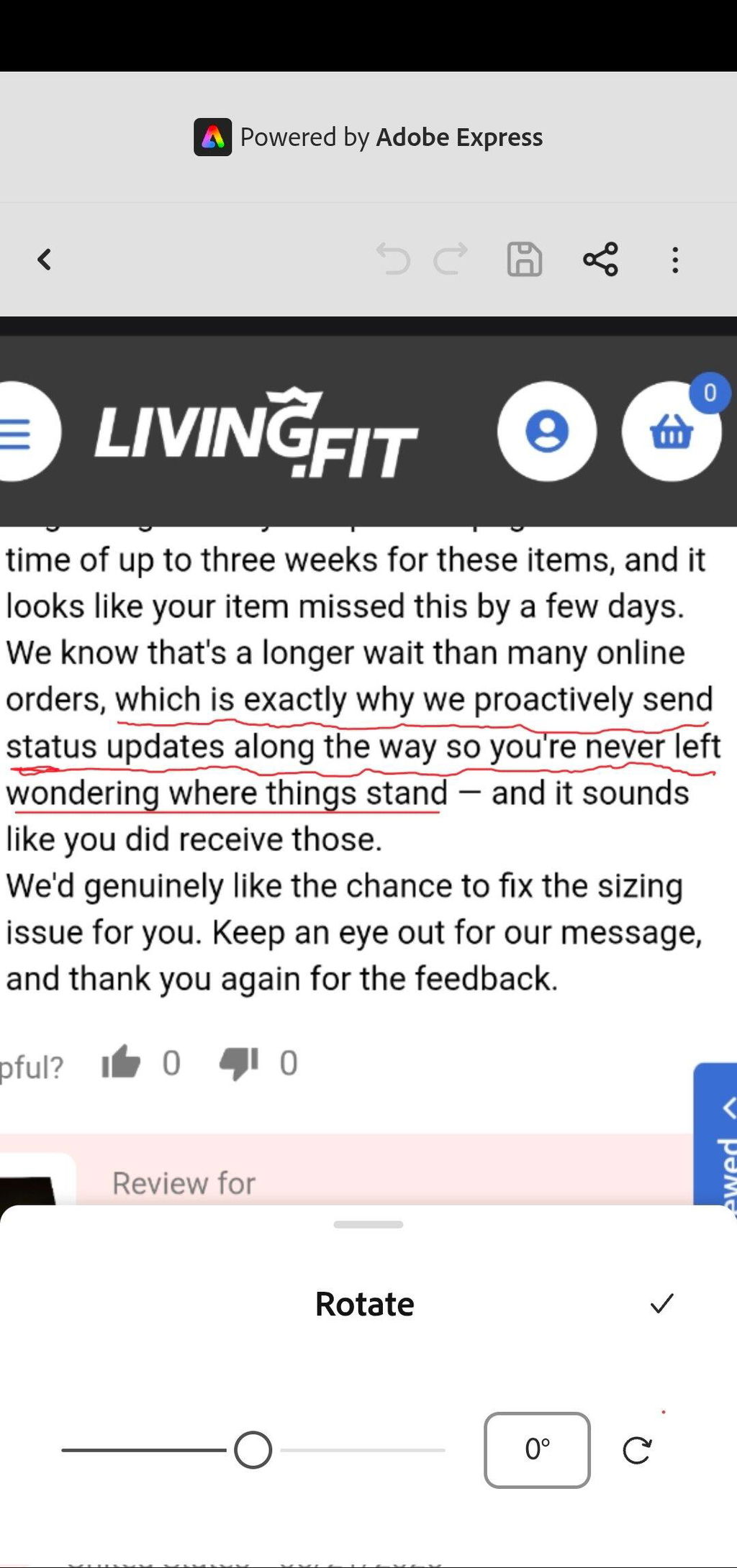
"Which is why we proactively send out notifications on status updates so you're never left wondering where things stand"
That fictional line is a great, heartwarming response to another customer to which I cannot share the same experience whatsoever. Every line of communication was initiated by me, I recieved zero status updates while their product took near triple the amount of time to arrive, and eventually just showing up unannounced at my door a month later.
This product is great, the quality is good, they give extra flooring to account for mistakes, and you can order precisely the exact amount needed for a reasonable price. Their customer service falls way behind their product however.
If you're not worried about a timeline to recieve a product, and you don't mind 700lbs or more being randomly delivered to your door on a day you're not expecting then this is a solid buy.
I don't regret this purchase, but I was disappointed in my experience dealing with this company.
Thank you for the kind words on the product, that genuinely means a lot. We do want to address the experience though because you deserve a full explanation.
We understand the frustration with wanting a quick response, but we want to be transparent about the timeline. We responded to your initial outreach within 24 hours and since it was towards the end of work hours, it was one of the first things our team got to the following morning. We told you it would ship by end of the week and it did ship that Monday. Tracking didn't come through until Tuesday which is when we passed it along immediately. We do apologize again for the delay with that with our tracking system having the difficulties it has.
Regarding the live chat, it is a new feature we are actively testing for product related questions and is not just for show. We are working on improving the experience and appreciate the feedback.
We also want to be clear that we never hide from delayed orders. We proactively send emails walking every customer through their order status from processing to delays to extended delays. We never go silent on our customers and we are sorry this experience felt that way.
Hardly any smell, can barely see the seams, easy install, and the fleck looks awesome. Well worth the extra cost over horse stall mats. My only issue was that some of the tiles would show a different grain texture when the light hit just right… this was mitigated by rotating the tile 90 degrees, so it really wasn’t a problem.
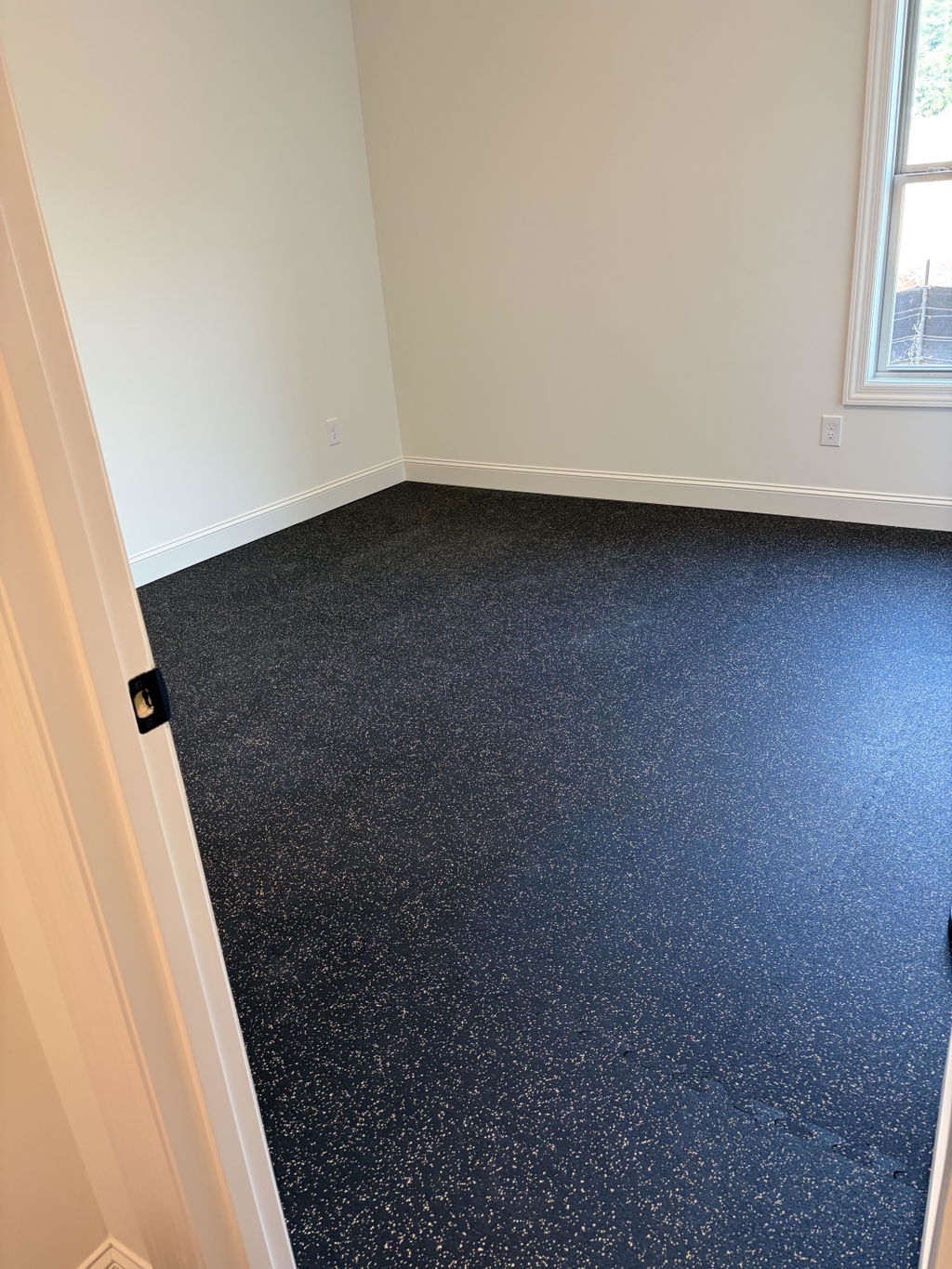
Hi James, thank you for sharing your experience! That is a great looking room! We're glad you love the quality and look of our tiles. Your tip about rotating the tiles is really helpful. Enjoy your upgraded space!
I got the 1/2 inch thick grey fleck interlocking tiles and they work great. However, I’m knocking off a few stars for a misleading email I received from the company post purchase.
After I purchased the product, I got the attached email saying “Leave your review below and receive up to 10% off your next order. Your discount is our way of saying thanks for taking the time to leave an honest review." I wrote a review for the product but unfortunately, I received no discount on my next purchase. When I reached out to customer service, the company responded with the following: “The ‘up to 10% off’ refers to the rewards points earned from leaving a review. Those points are added to your rewards account and can be accumulated and redeemed for discount codes, including rewards worth up to 10% off once enough points have been earned.”
Per the photo attached, the email does not mention anything about a rewards program or rewards points. I wanted to share so that other customers who received a similar email can set appropriate expectations. Going forward, I hope the company reexamines their marketing communication to provide more clarity to customers.

Thank you for the review, and we're glad the 1/2' grey fleck tiles are working great for you!
We'd like to clear up the discount for you and anyone reading. The 'up to 10% off' is delivered through our rewards program, you earn points both on your purchase and for leaving a review, and those points redeem for a discount code worth up to 10%. The value was there all along; the email pointed to the reward without naming the rewards program, which is where the mix-up came in.
To make it effortless, we've also sent you a direct 10% code to use whenever you'd like.
Taking care of our customers is what matters most to us, and we're grateful you gave us the chance to make this right. Thanks again for your business and enjoy the new setup!
I ordered these rubber gym mats expecting a good quality product for my home gym, but what arrived was nothing short of disappointing. The mats were already perished, with cracking and degradation visible straight out of the packaging, as if they’d been sitting in poor storage conditions for a long time. On top of that, the cuts were uneven and imprecise, despite the product being marketed as “precision cut.” To make matters worse, the mats arrived dirty, covered in what looked like boot marks and general grime, clearly not new or properly inspected before dispatch.
I contacted customer service expecting a straightforward resolution, but instead was met with delay after delay. They repeatedly fobbed me off, gave vague responses, and ultimately refused to acknowledge that the product was faulty or misrepresented. At no point did they take responsibility or offer a genuine solution.
Given the poor product quality and the complete lack of accountability from customer service, I would strongly advise against buying from this company. Save yourself the hassle and look elsewhere.
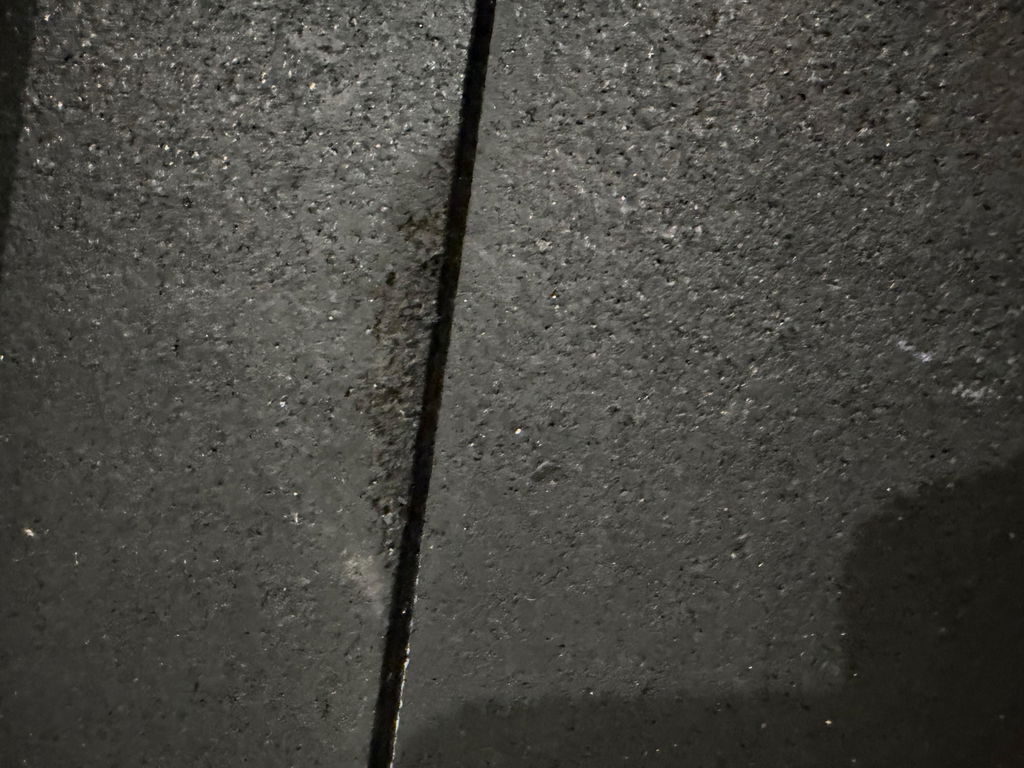
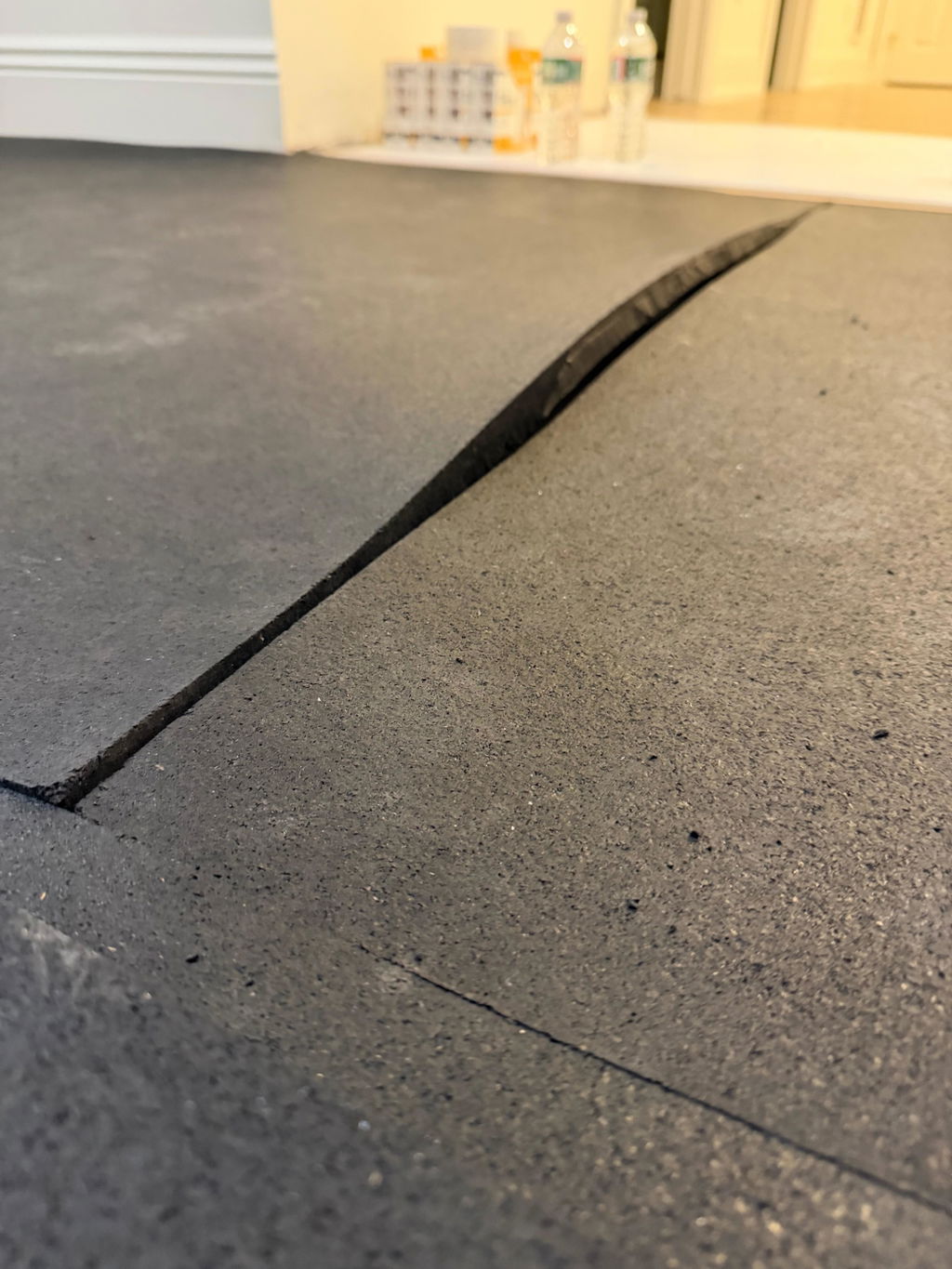
We responded to every message within about one business day, and we offered to replace the exact mats shown here at no cost. That offer still stands. We're sorry this order didn't meet expectations, and we'd like to add some context for anyone reading.
The first message reached us on July 16, and our team replied the next morning. Over the three weeks that followed, we responded to every message, typically within one business day and addressed each concern individually: the surface marks, the curling, the edges, and the mat with a missing chunk. We never stopped responding, and we never declined to help.
On the product: these are 18mm rubber mats that ship rolled. As noted on the product page, rubber has 'memory'. It curls in transit and relaxes flat over a short period, a process that's helped along by reverse-rolling, weighting the seams, and securing the edges.
Precision cut means these arrive sized to the exact lengths ordered, rather than the six-to-twelve inches of overage that standard-cut flooring ships with for trimming. As a natural rubber product, the edge still carries a small dimensional tolerance, it's flexible, not rigid like metal but the pieces come cut to spec, which is the precision the name refers to.
Where our production team did find genuine issues, the mat with the chunk missing and one piece that fell outside acceptable tolerance we identified them and offered to remanufacture and replace them at no cost, asking only for the dimensions so we could get them into production right away. The photos shown here are those same two mats. That offer to make it right was on the table throughout our exchange, and it still stands today.
We hold ourselves accountable when something is wrong, and we did here. We have an extremely low rate of issues with orders like this as exhibited by our reviews. We're sorry we couldn't reach an outcome you were happy with, and our door remains open to complete that replacement whenever you'd like for the mats in question.
Great. High quality product
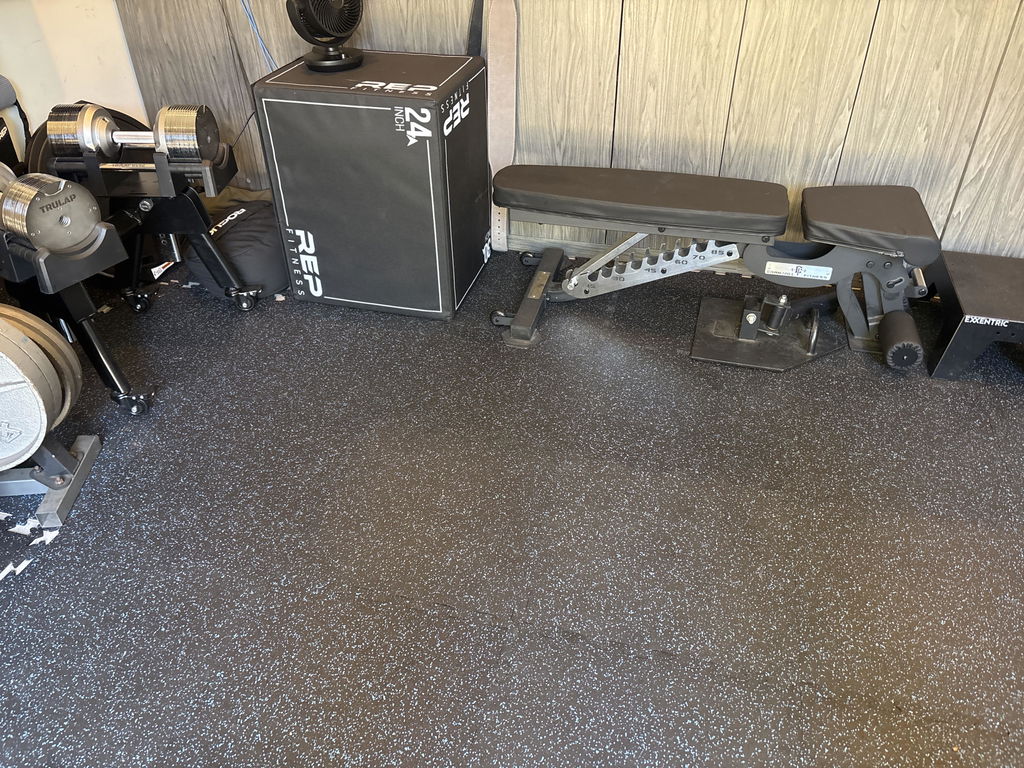
Thanks for the high praise Jeff! We appreciate it
I started my purchase by ordering a sample. Based on the sample, I ordered two mats 4 ft by 10 ft. They're thick and heavy and butt up against each other and you almost can't see a seam between them. Didn't use any tape or anything they stay in place..
Everyone agrees they look good..
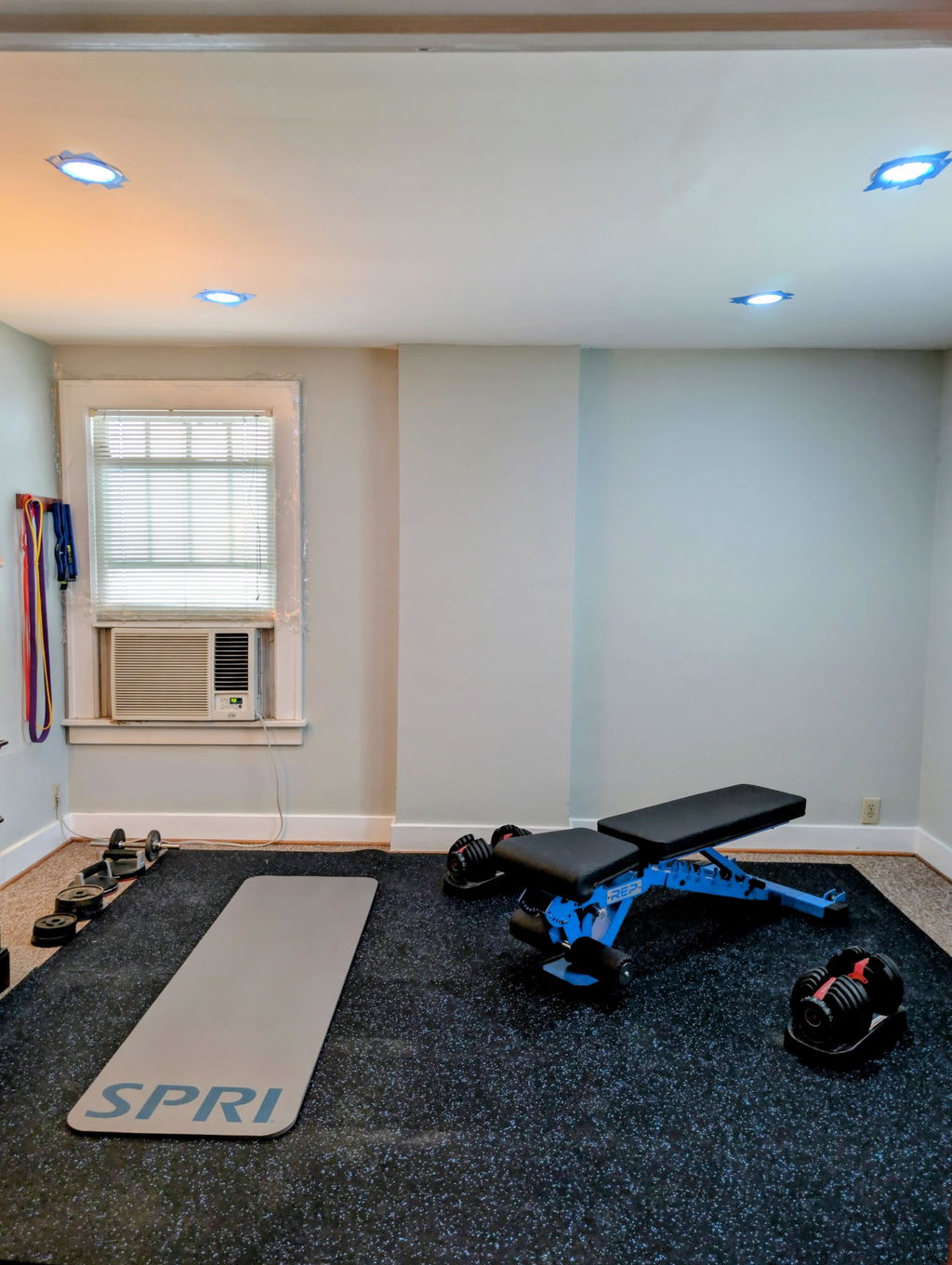
Flooring was great!
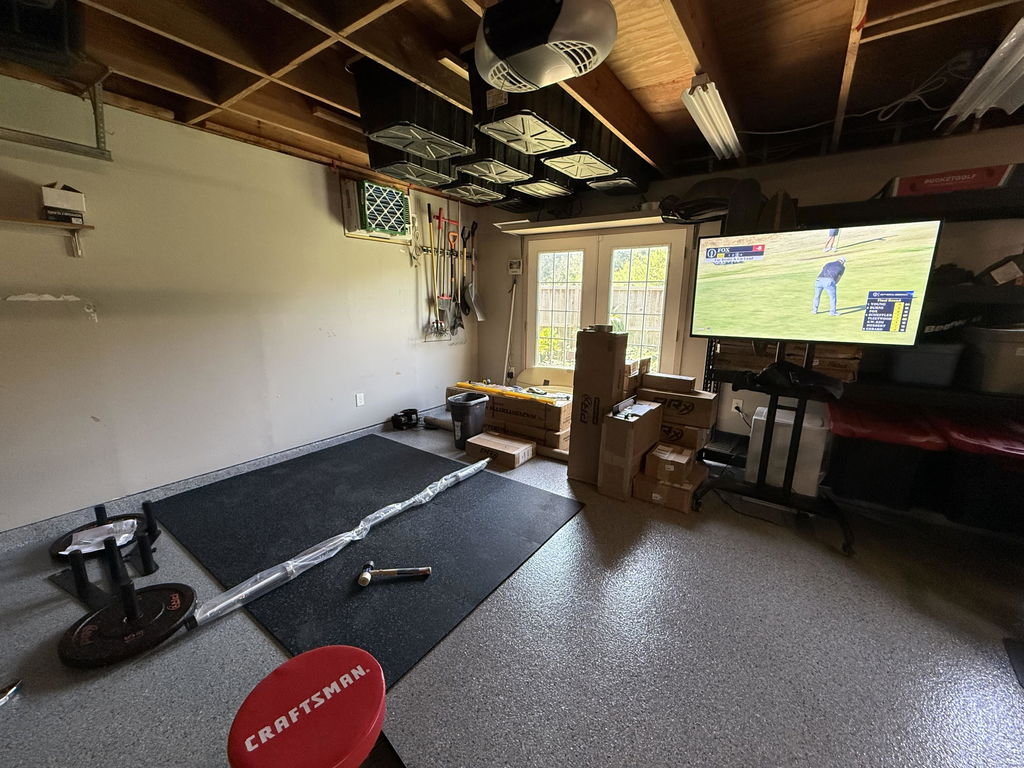
Love seeing the setup! Nothing beats the TV-Gym combo 💪
The mat itself was ok, but the cuts were very rough and nothing was squaring. There were also pins in the mat that had to be removed.
It felt like someone had returned it and it was shipped over without even checking.
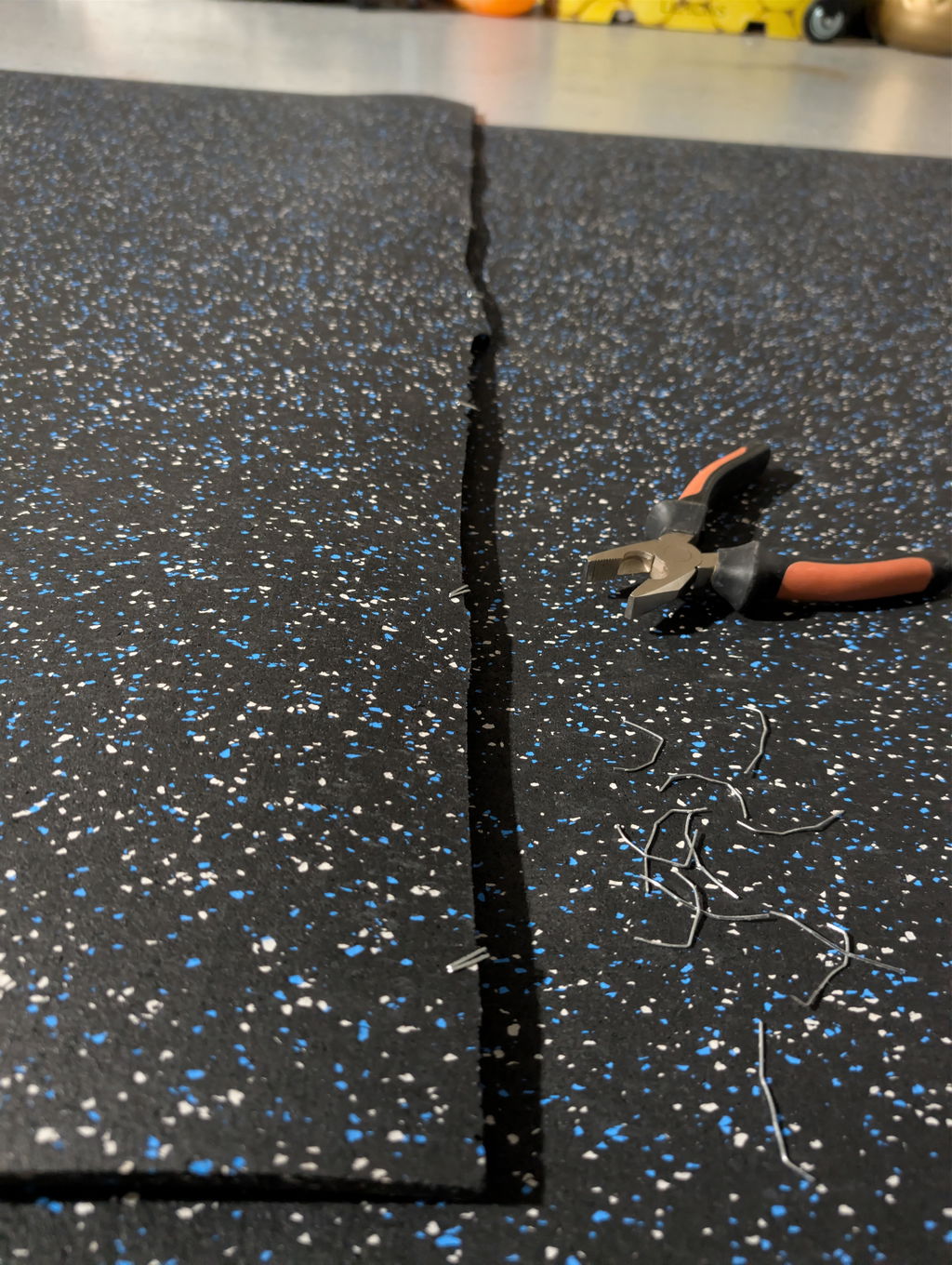
We're so sorry to hear your order didn't meet your expectations. The rough cuts and lack of square edges are absolutely not the standard we hold ourselves to on Precision Cut Mats, and we appreciate you bringing this to our attention so we can make it right.
We also wanted to clarify that the pins you found are part of the standard manufacturing and shipping process used throughout the rubber flooring industry. They are used to secure the rolled rubber to the cardboard core during production and shipping so the roll stays tightly wound, and they are not an indication that the mat was previously used or returned.
Please be on the lookout for an email from info@living.fit. We'd appreciate the opportunity to coordinate any needed replacements at no cost to you and ensure you receive the quality you expected.
Perfect for garage gym. Tiles absorb dumbbells and barbells and make my home gym feel elevated. The interlocking feature allows me to play around with size and orientation.
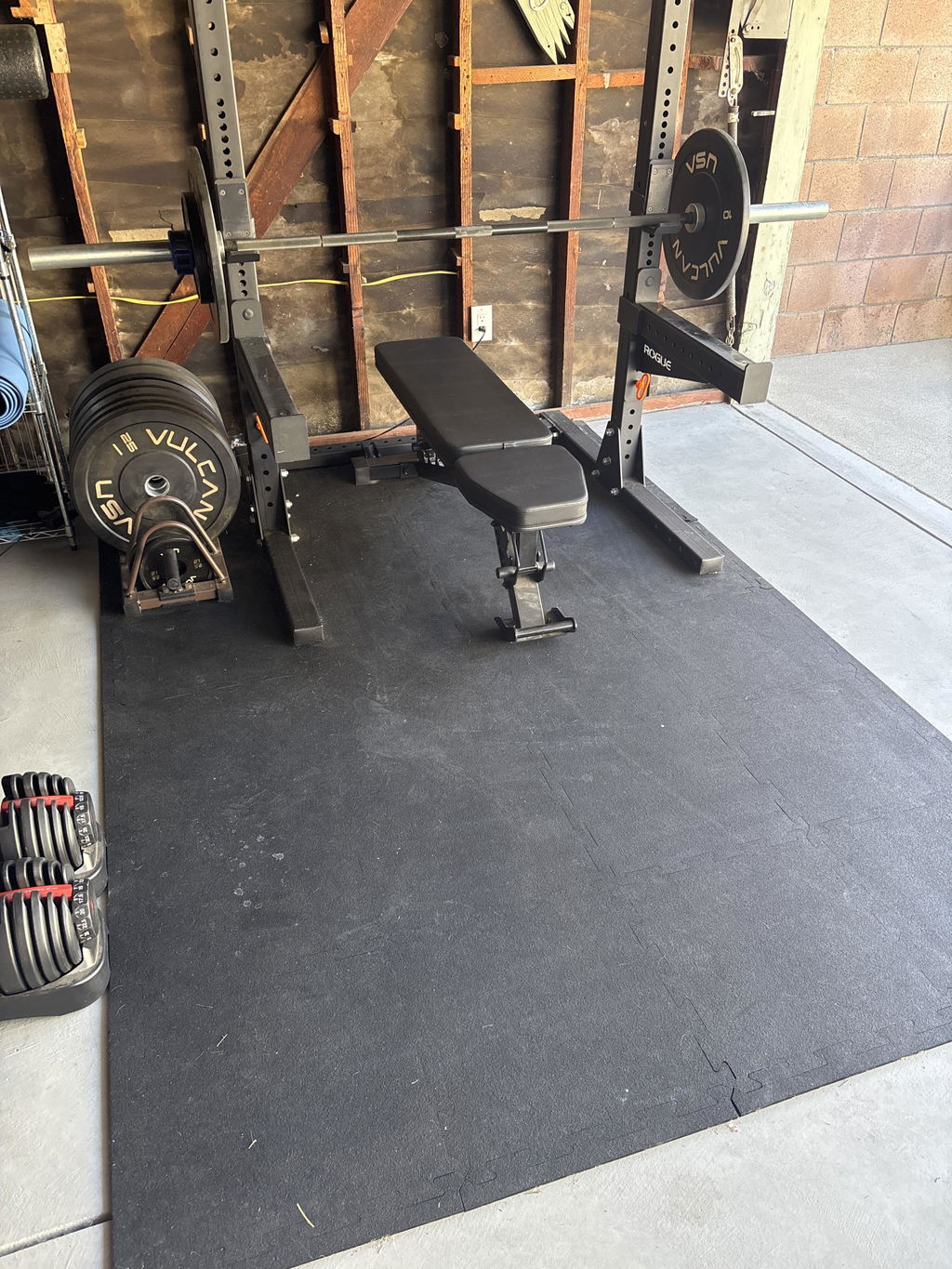
Love seeing the setup! Thanks for the review and trusting us with being the foundation of your home gym 💪
After watching home gym reviews I decided on purchasing the interlocking tiles. They are easy to install. Installed during/while I worked out for 2-days. I have been getting a lot of compliments from neighbors and family.
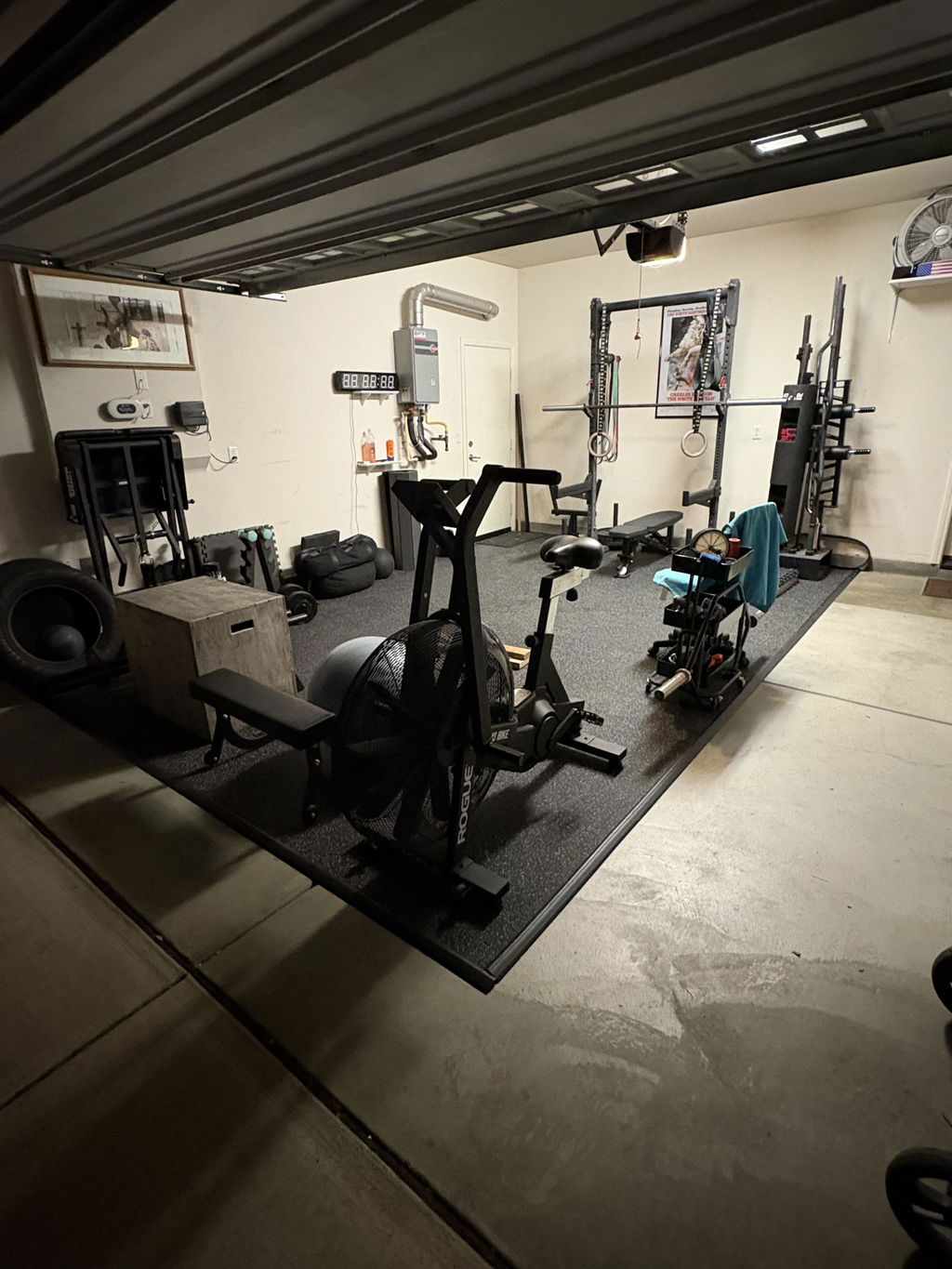
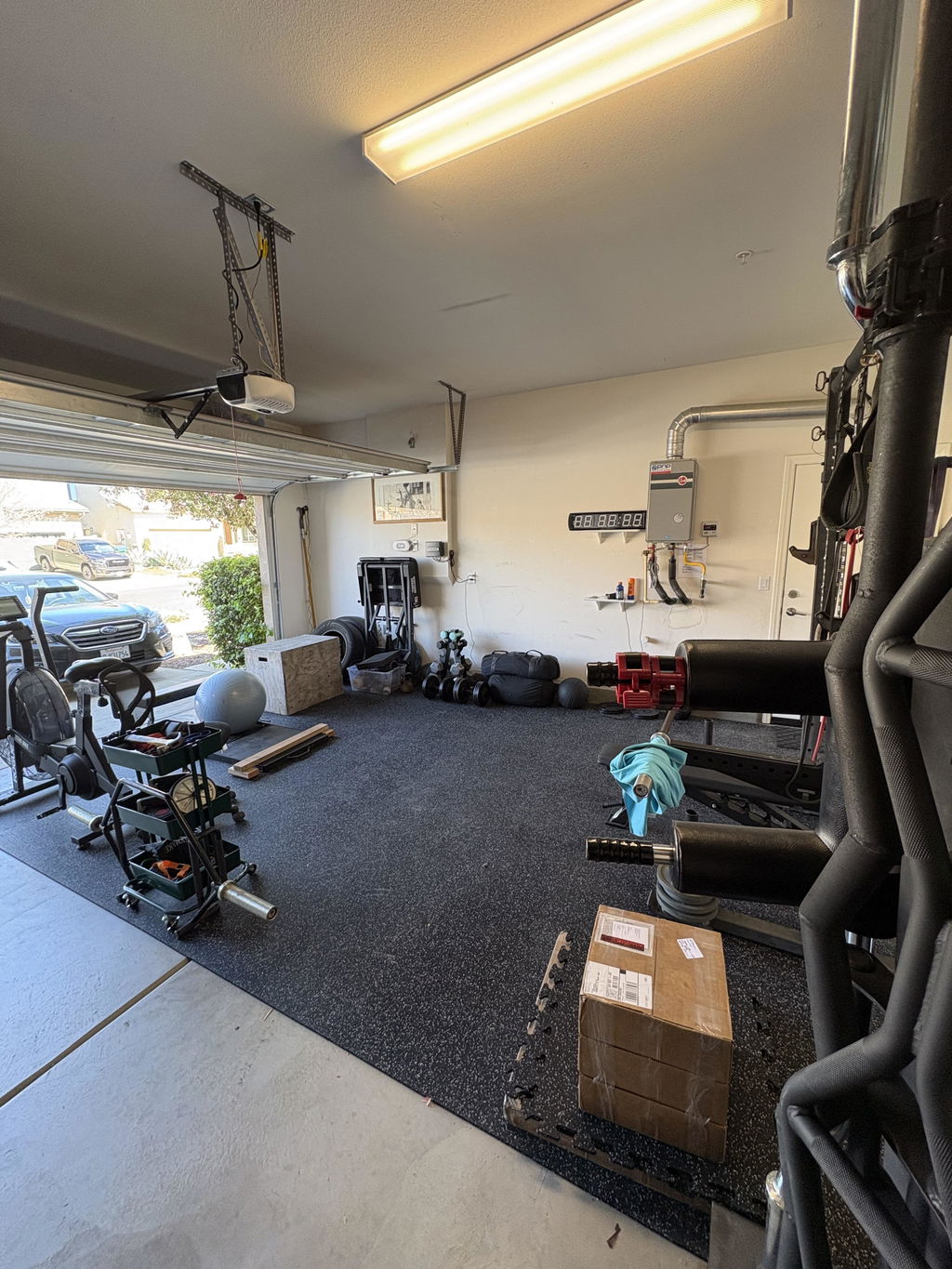
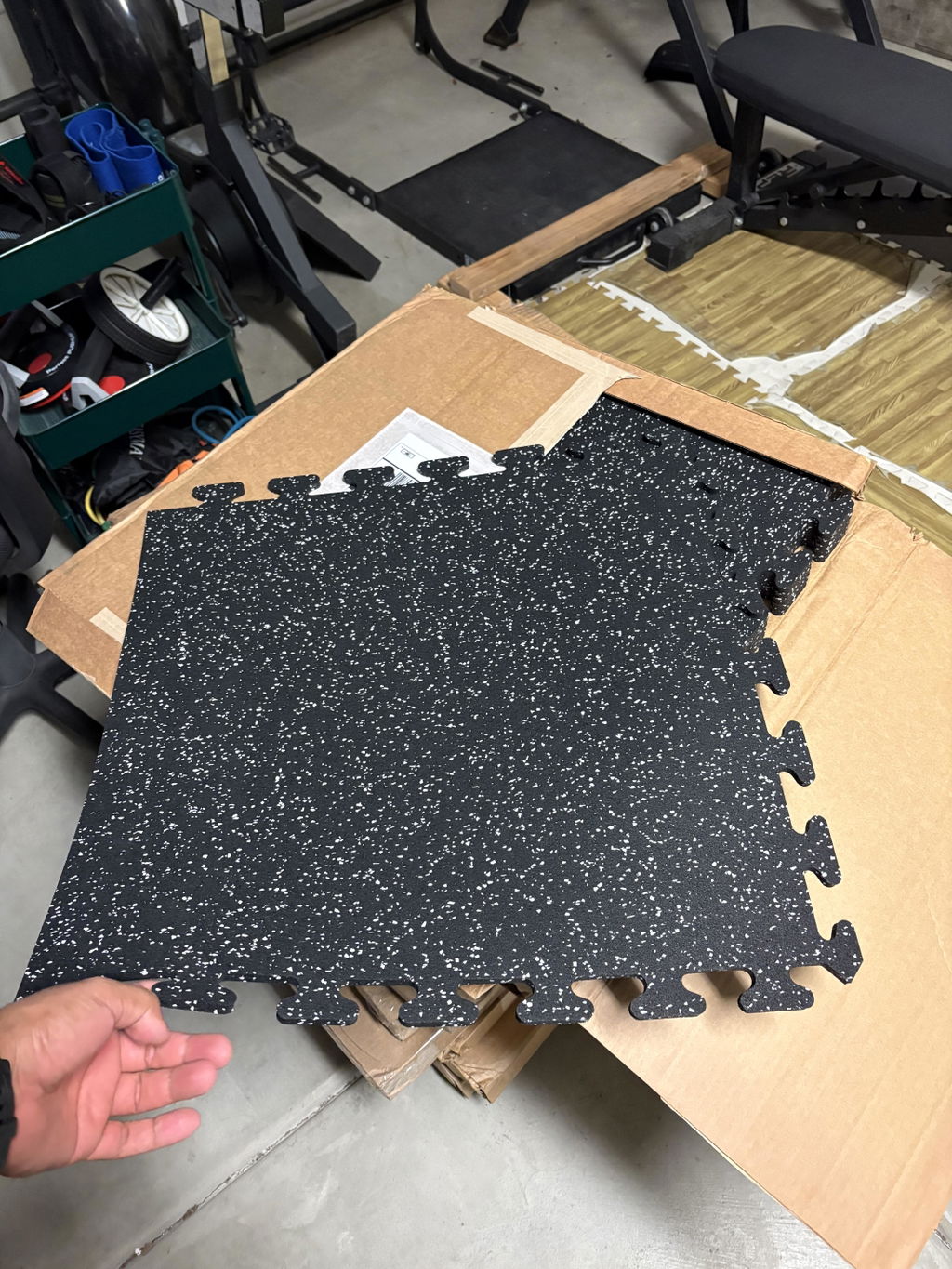
Glad to be the star of the family/neighborhood! Thanks for the kind words and review
I installed rubber rolls with grey flecks in my open rectangle room with a concrete floor.
I did use two sided tape from living.fit to keep the seams tight and the edges secure.
It turned out awesome and absolutely transformed and leveled up the room. Now it looks and feels like a gym.
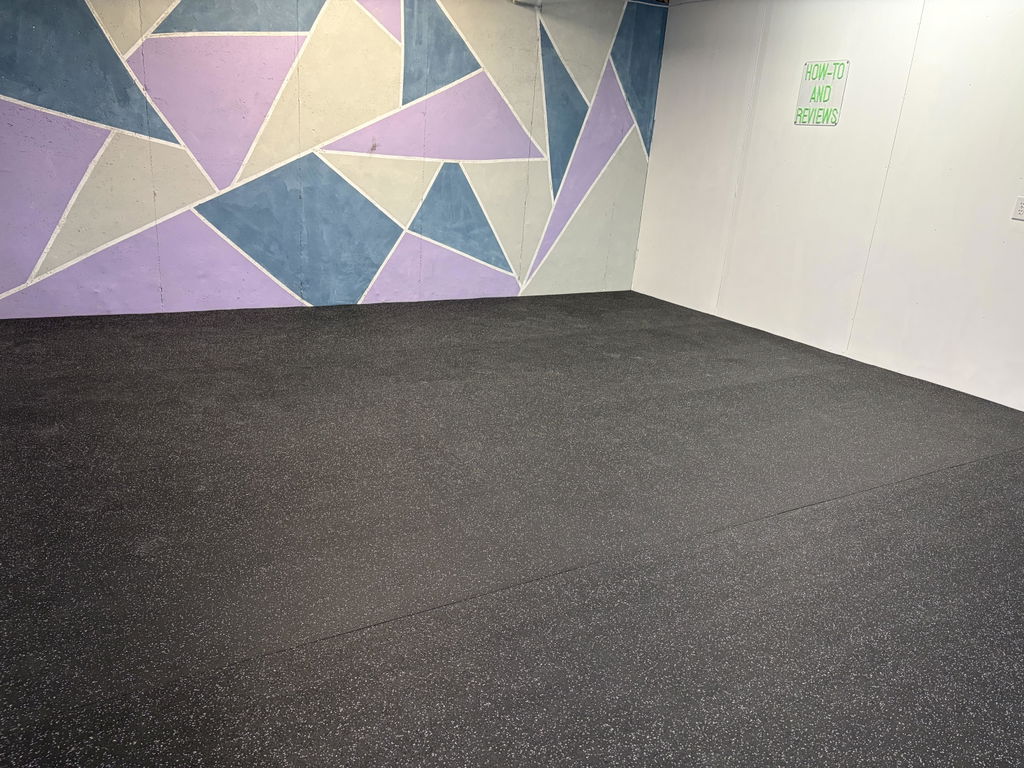
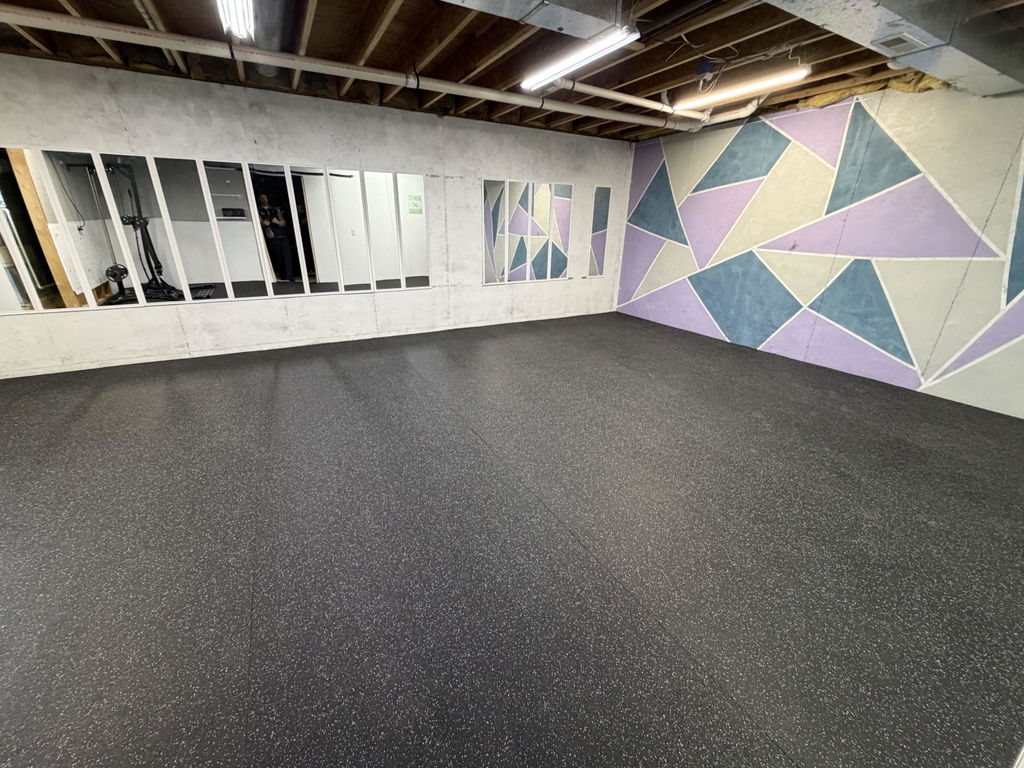
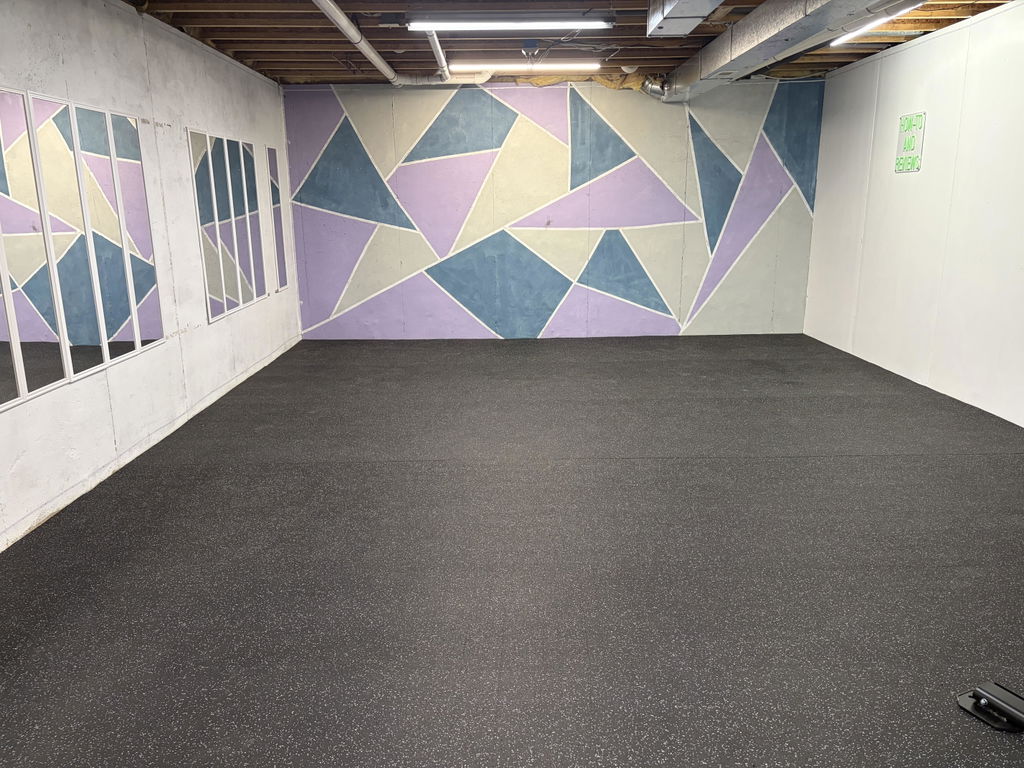
Thank you so much for taking the time to leave a review. We're thrilled to hear that our flooring have transformed your room and given it a gym-like feel. We're glad to have helped level up your space
Beyond happy with purchase. I purchased 3 other flooring tiles that I returned because quality was not good. I was so happy to find this brand. They are easy to install, quality is amazing, and also easy to cut to get the perfect fit in room
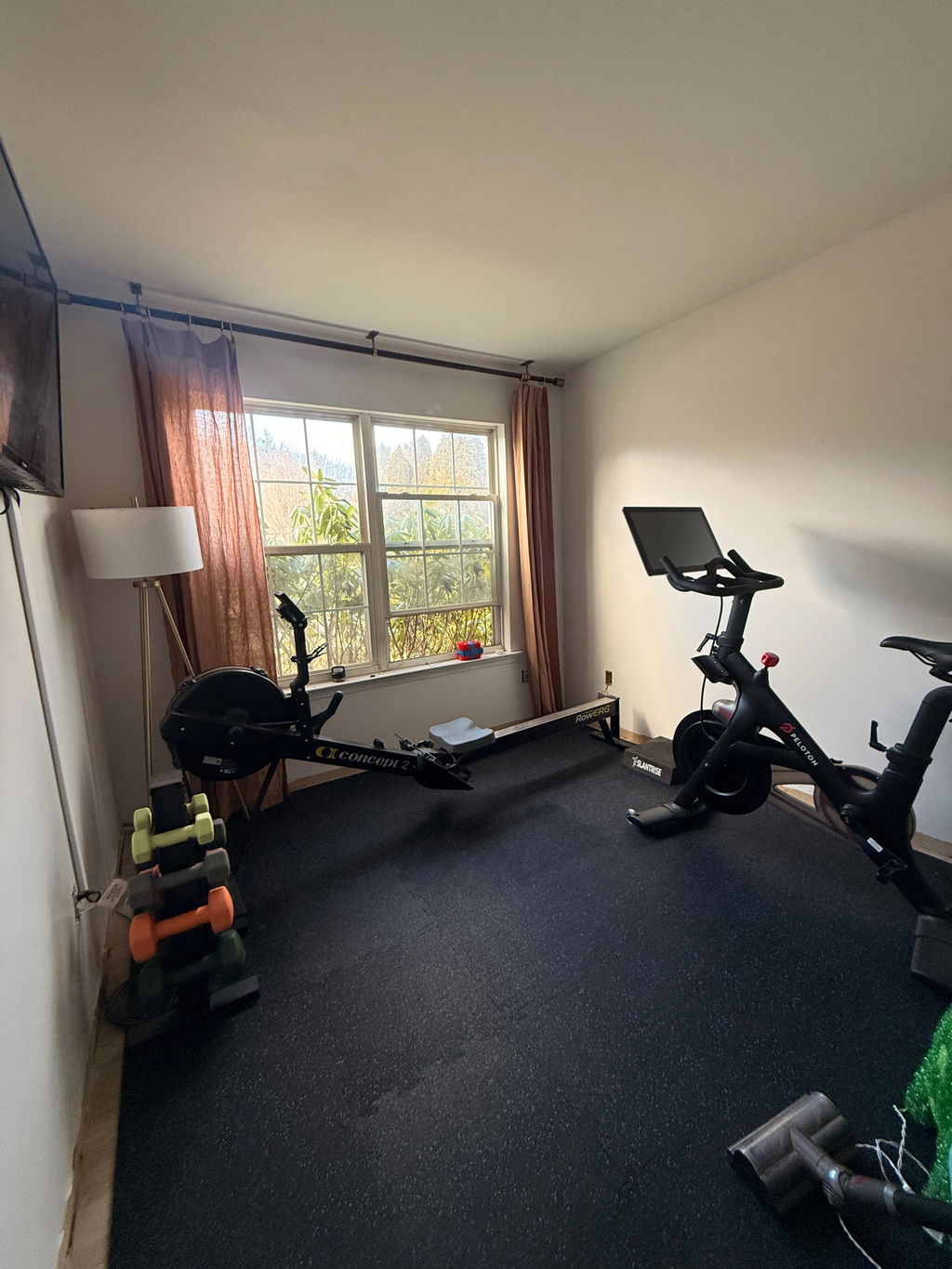
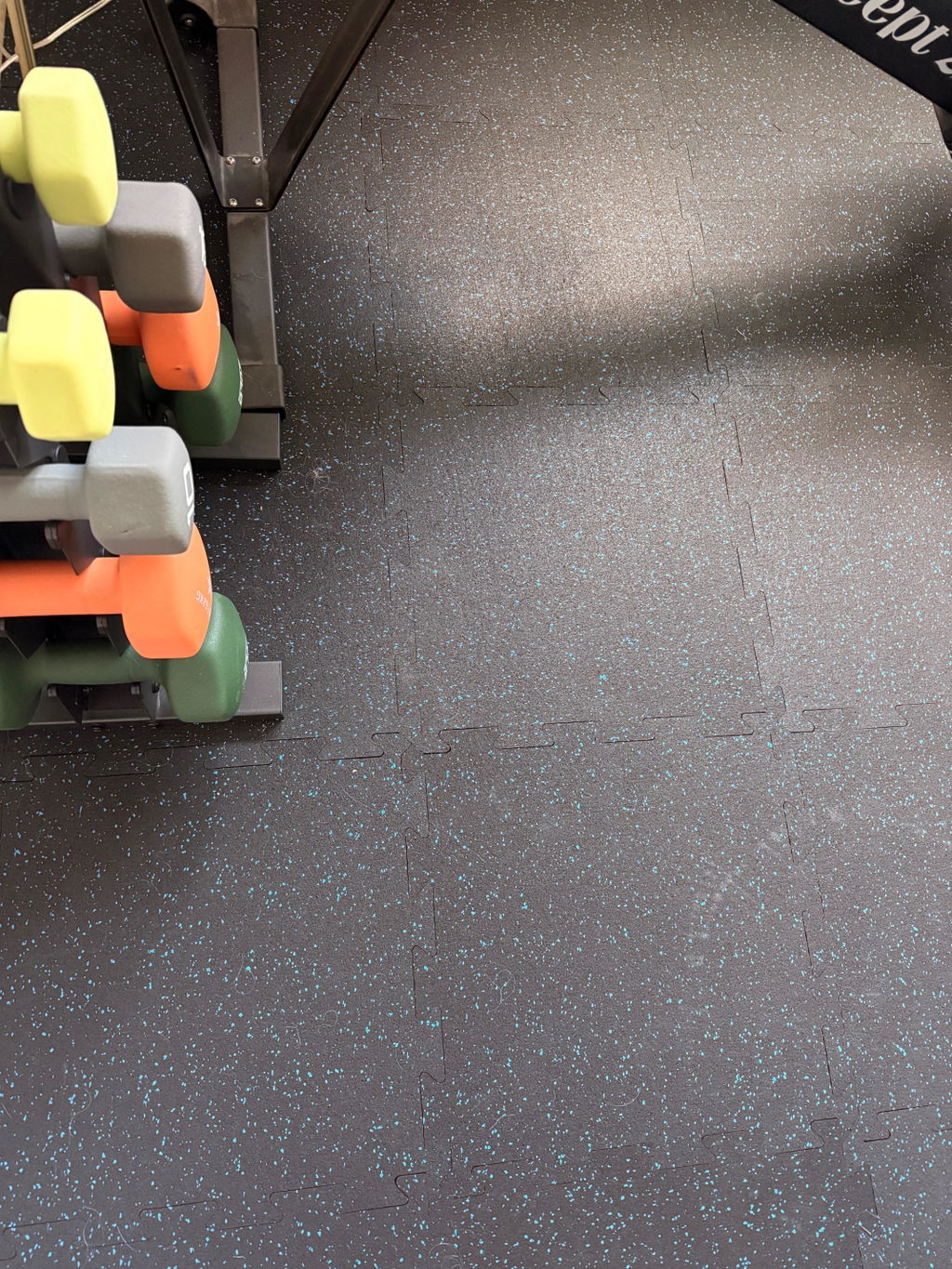
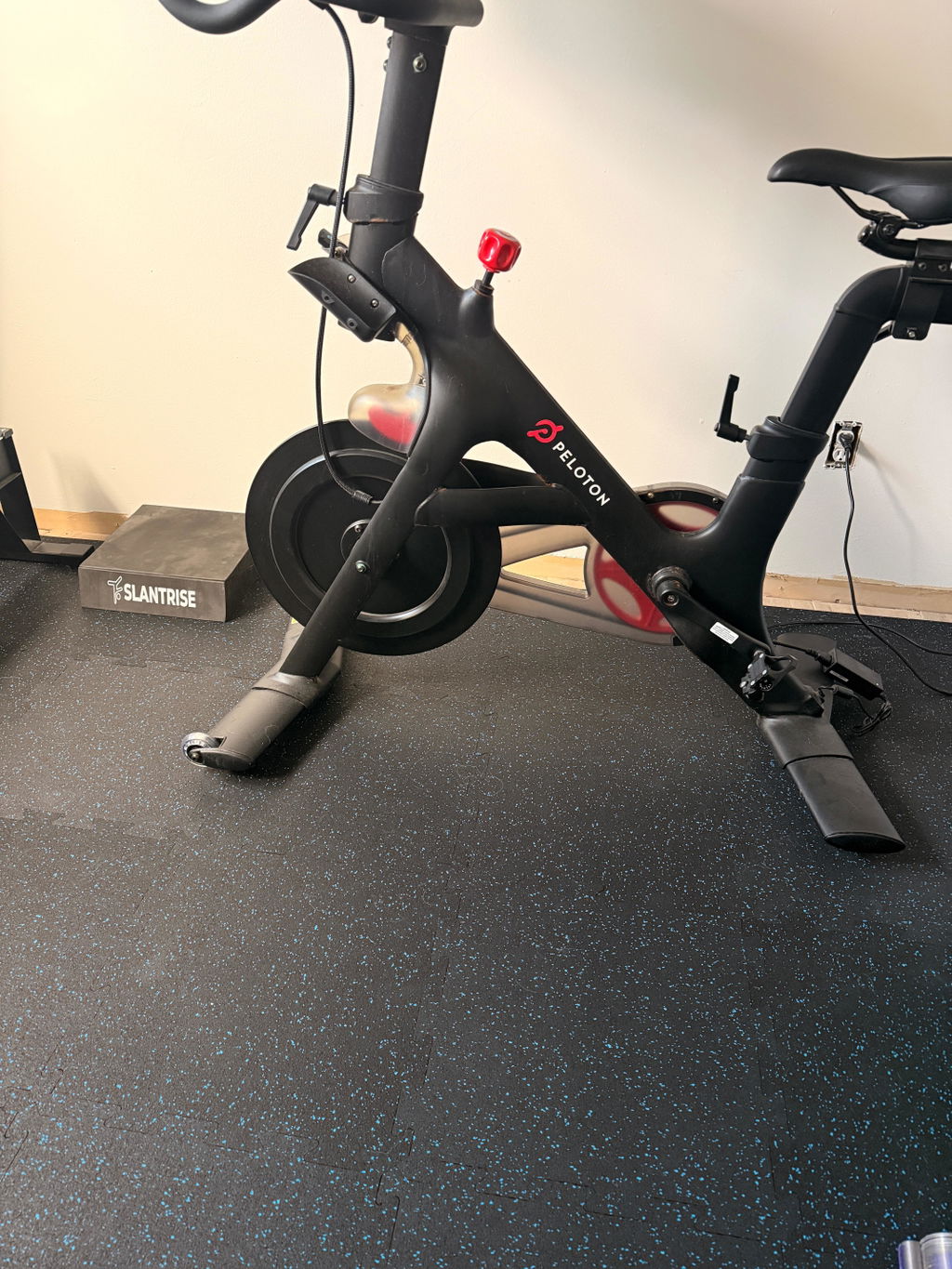
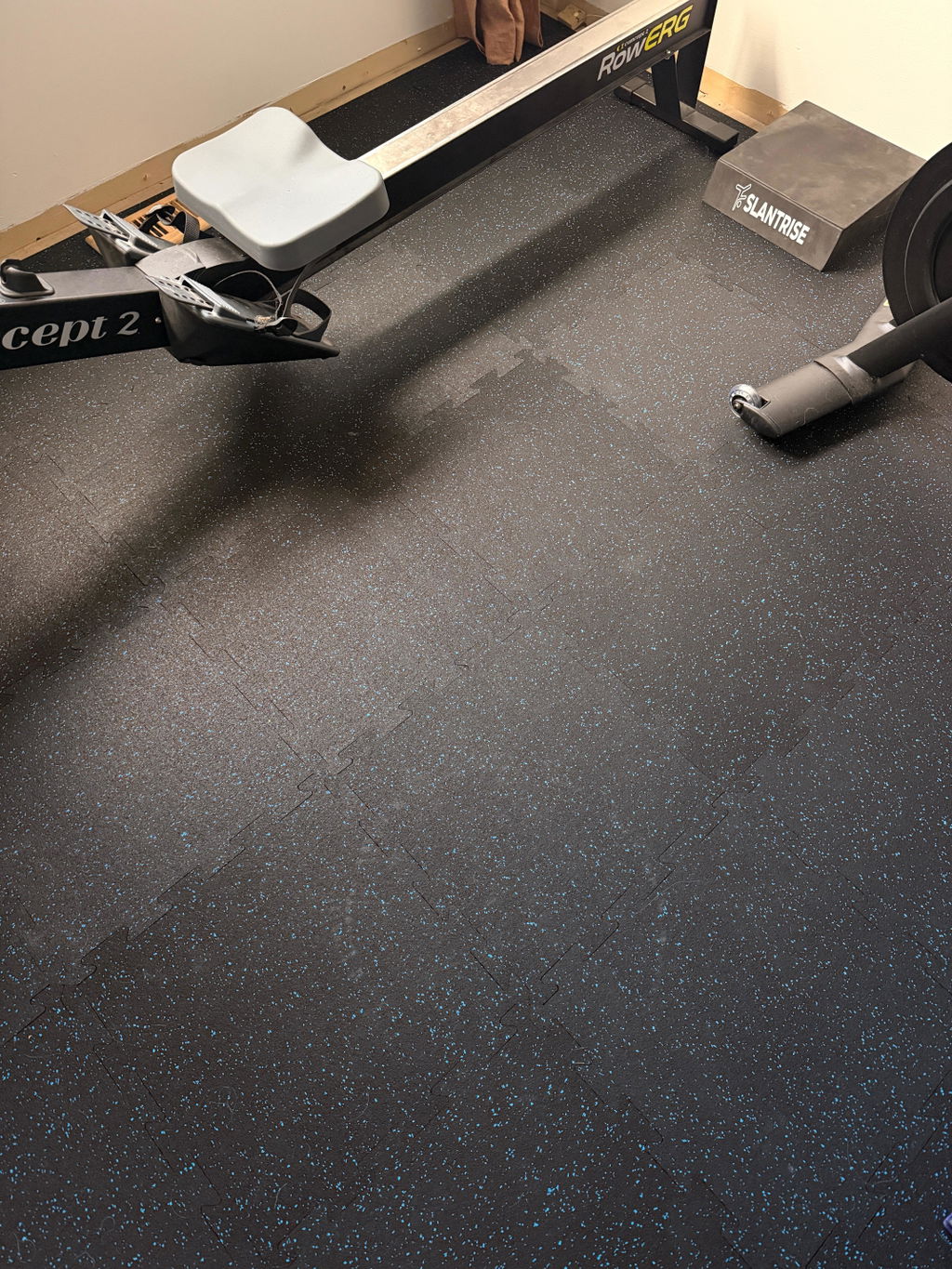
Thanks for your purchase and for sharing! Tag us on social media as @living.fit, we love to reshare!
We tried this flooring for under our rowing machine to keep it from moving up or back. It works great! Our row erg doesn't budge on this floor. We
decided to buy more to cover the rest of the floor because we love how it looks. And it is much more comfortable to work out on when using the floor. Customer service was great too!
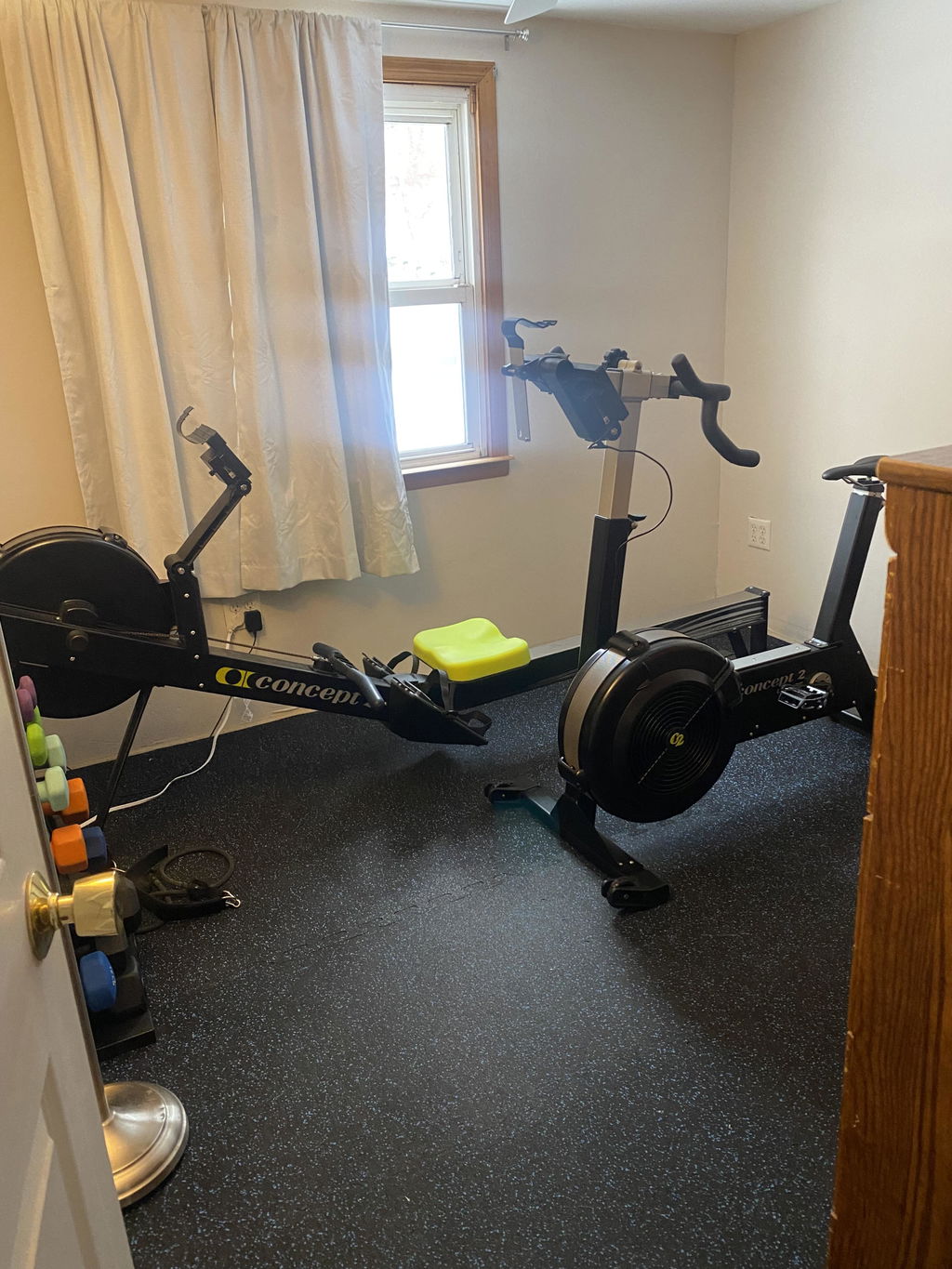
Thanks for your purchase and for sharing! Tag us on social media as @living.fit, we love to reshare!
Tiles are well made and fit together perfectly!
All the tiles fit perfectly with no gaps on a 9'x9' garage gym floor. I'll be adding another 27 sq. ft. shortly!
They smell but they're great! Seriously, though, easy to assemble, quick shipping, and I love them in my gym.