Ordering & Customization
Q: How thick should my flooring be?
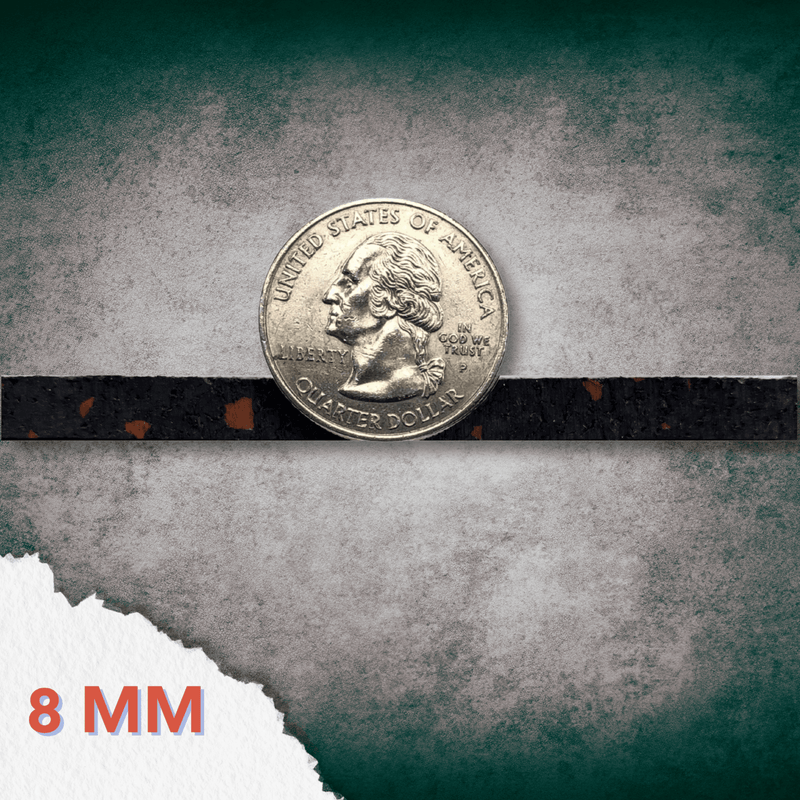
A: It depends on your training style and equipment. 6mm — light weights, stretching, bodyweight work. 8mm — home gyms, functional trainers, squat racks, treadmills. 9mm — CrossFit/commercial, heavier drops. 12mm — Olympic lifting, frequent barbell drops. 18mm — powerlifting, extreme drops, industrial use.
Q: What's the difference between Confetti, Natural Recycle, and Standard rubber?
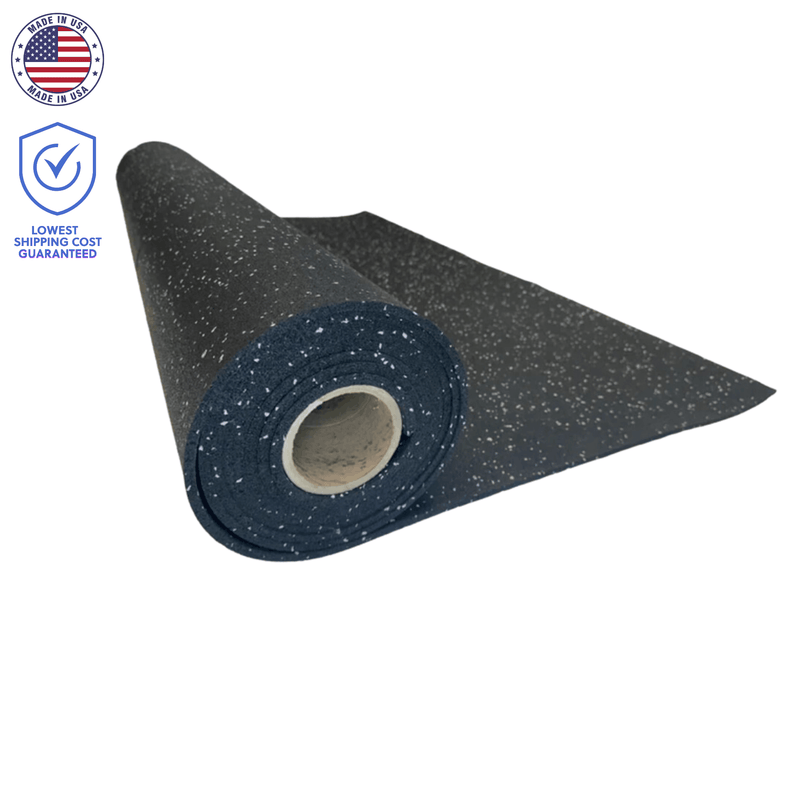
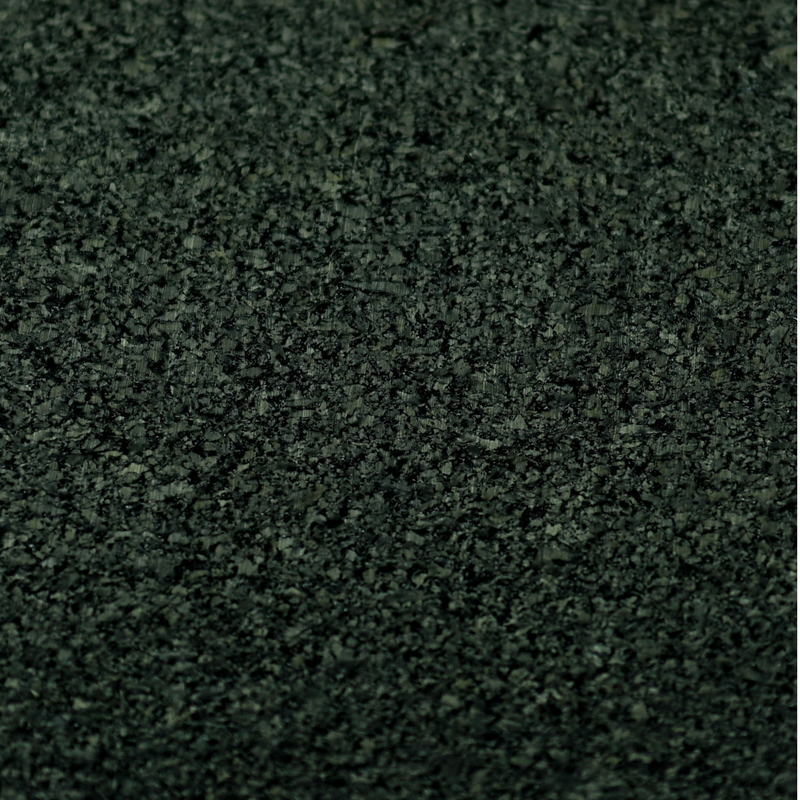
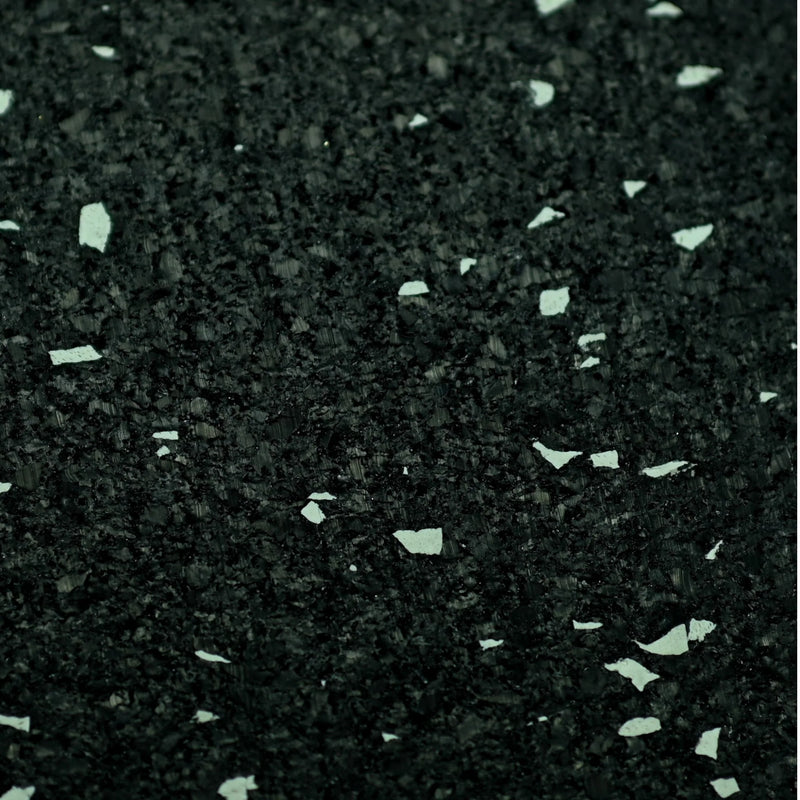
A: It comes down to material source and consistency. Confetti uses mixed-color recycled scraps (speckled look, slight variation roll to roll) and color patterns can differ across different pieces and orders. Natural uses more neutral/black recycled scraps (muted gray-black look). Standard uses controlled materials for the most uniform color and density.
Q: Can I order a custom color/thickness combo?
A: Yes, for larger orders. 5,000+ sq ft: email info@living.fit. Custom thickness/color under 1,100 sq ft: same email, we'll quote it.
Q: Can I get a free sample before ordering?
A: Yes — click "Order a Free Sample" under the Add to Cart button on this page for a physical swatch before you commit.
Q: How can I contact you with questions?
A: Email us at info@living.fit or use the chat icon and we'll help.
Q: How much flooring do I need?
A: Multiply the room's length by width for total square footage, then order a little extra for trimming. Rolls are 4 ft wide, so larger rooms need multiple rolls side by side. Use the calculator on this page for an exact quote.
Installation
Q: Do rolls need to be glued down?
A: No — tape is enough for most home gyms. The rubber's weight keeps it in place day to day; double-sided tape along seams and perimeter prevents shifting under heavy equipment. Full glue-down is only needed for commercial or high-traffic spaces.
Q: Does the roll come with tape included?
A: No — tape is available as a separate accessory add-on, not included with the flooring roll itself.
Q: How much adhesive do I need, and does it bond to concrete?
A: Yes, it bonds well to concrete, including smooth-finished surfaces (clean and dry the surface first). Two methods: perimeter-bond (adhesive around edges only — roughly half the material, best for home gyms) or full glue-down (adhesive across the whole surface — for high-traffic or heavy-equipment spaces).
Q: Can this be installed over concrete or existing floors?
A: Yes — concrete, wood, and other hard surfaces all work well and give the most stable base.
Q: Rolls or tiles — which is better for my space?
A: For open, rectangular rooms, rolls give a more seamless look with fewer joints. For smaller or irregularly shaped spaces, tiles are easier to fit and install piece by piece.
Q: How do you cut rolls during installation?
A: Score with a utility knife along a straight edge, then make multiple passes to cut through cleanly. Measure carefully and leave a little extra material for a precise fit.
Q: Does rubber flooring damage concrete or garage floor sealers?
A: No — it protects concrete rather than damaging it. One caution: rubber can occasionally react with certain sealers or freshly coated concrete. Use a vapor barrier or let sealed floors fully cure before installing.
Q: Do I need underlayment?
A: No — the dense rubber itself provides cushioning and impact absorption in most cases.
Q: How do I make edges lie down.
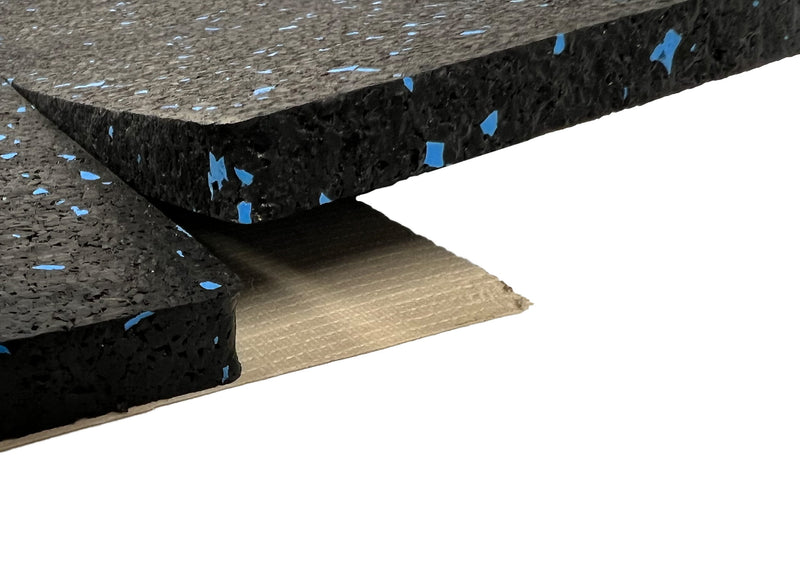
A. When first received, rolls and mats (especially thicker pieces) may have edges that point up (illustrated in vide). This is common. Please weights on the ends for a couple of days to reduce any bend you see.
Performance & Durability
Q: Will it protect my subfloor and reduce noise from dropped weights?
A: Yes — it absorbs impact and reduces vibration and noise from heavy equipment and dropped weights.
Q: Is it waterproof, and can I use it in a basement?
A: Yes to both. Rubber is naturally water-resistant, making it suitable for garages, basements, and other moisture-prone spaces.
Q: Can I put heavy gym equipment directly on it?
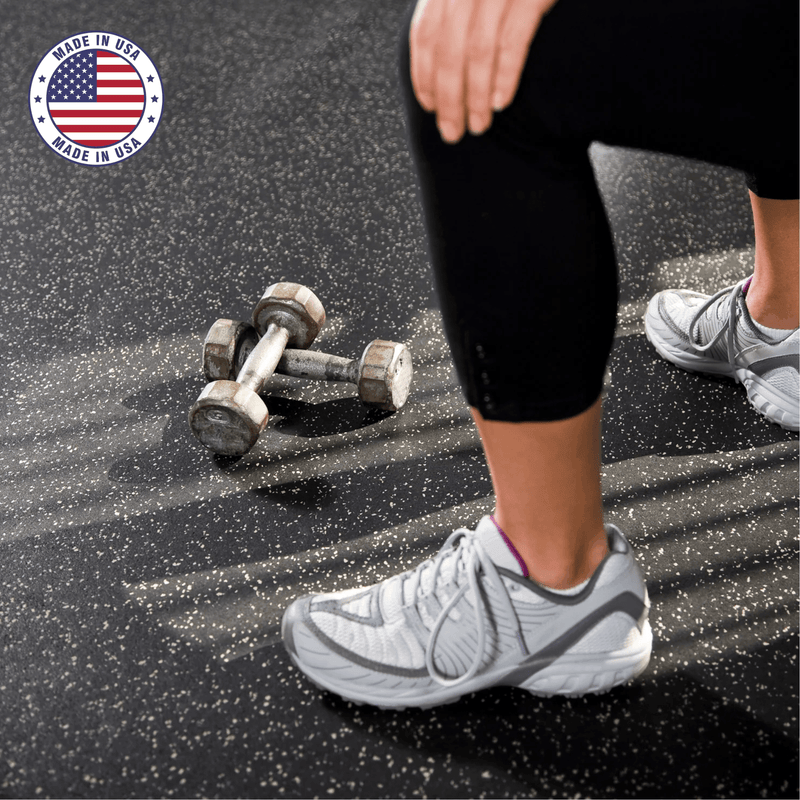
A: Yes — it's built to support squat racks, treadmills, benches, and functional trainers.
Q: How long does it last?
A: Many years with normal use — lifespan depends on thickness and intensity of use, but it's built to handle heavy equipment and repeated impact.
Q: Can it be used outdoors?
A: It's designed primarily for indoor use. It can handle some outdoor exposure, but prolonged sun and weather will wear it faster over time.
Q: How does it compare to foam mats?
A: It's significantly more durable and handles heavy weights and equipment, where foam mats are better suited to light exercise only.
Care & Other
Q: How do I clean and maintain it?
A: Sweep or vacuum regularly, and mop occasionally with mild soap and water. Avoid harsh chemicals or abrasive cleaners.
Q: Will it smell like rubber?
A: A mild odor is normal at first, especially with recycled rubber, and fades after airing out and cleaning. Higher-grade rubber has less odor to begin with.
Q: Why do rolls sometimes arrive slightly longer than ordered?
A: This is intentional — the extra length gives installers enough material to square the flooring for a clean final fit.
Q: Is Living.Fit flooring made in the USA?
A: Many of our rubber flooring products are manufactured in the USA using high-quality recycled rubber, to residential and commercial durability standards.